Sleep Song #2: “Sleepwalking” by Lyle Lovett

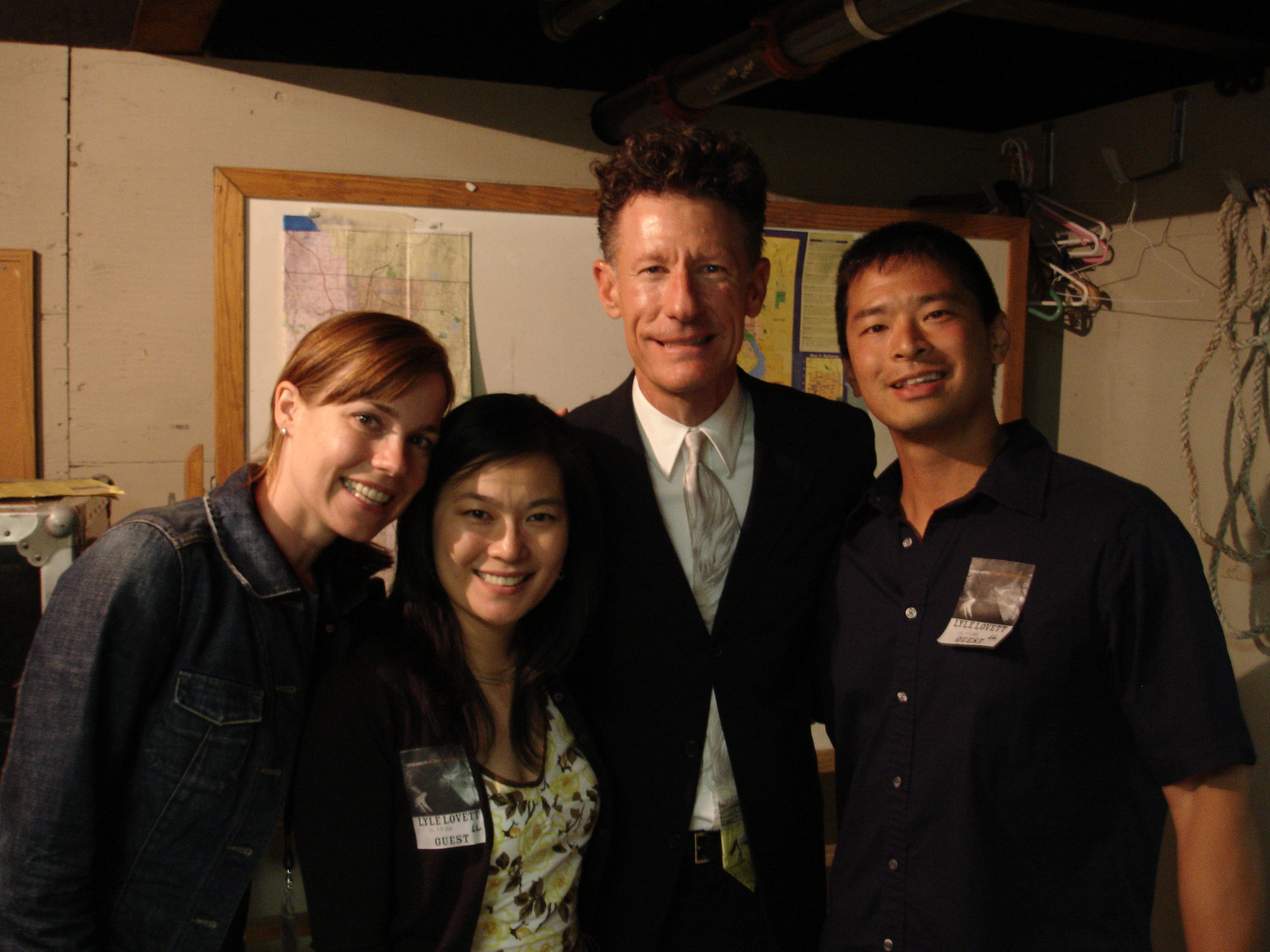
I’ve loved Lyle Lovett‘s music for decades. I met Lyle, quite by chance, in 2006 at the Dallas / Ft. Worth Airport International Airport, my layover between the Bonnaroo and the national sleep medicine meetings. He is the consummate Texas gentleman, pure class both onstage and off. It was an absolute pleasure to get to know him.
Lovett1

Among Lyle Lovett’s many great songs is “Sleepwalking,” from his 1998 album, Step Inside This House. As humorous as this song is (see the lyrics below), Lyle sings with substantial clinical accuracy regarding the mysterious phenomenon of sleepwalking, also known as somnambulism.

Sleepwalking represents a series of complex behaviors that tend to arise from arousals from non-REM sleep. Sleepwalkers walk about in an altered state of consciousness, often appearing confused or “glassy-eyed.” Judgment appears impaired. There can be variable degrees of interaction with their surroundings and with other people. Sometimes interactions with others can be inappropriate above and beyond the apparent confusion; agitation or even violence may occur in this setting. In the morning, upon awakening, they are usually partially or completely amnestic of the previous night’s sleepwalking event.

Because sleepwalking and other related parasomnias (the clinical spectrum of unusual movements or behaviors that occur during or out of sleep) tend to occur following abrupt arousals from deep forms of non-REM sleep (called “slow wave sleep“), it stands to reason that people who have lots of deep sleep at night may be particularly prone to sleepwalking. As such, those who are sleep-deprived or who have preceding insomnia (such as the protagonist in Lyle’s song) can be predisoposed to sleepwalking. Other factors that may increase a person’s risk for sleepwalking would include alcohol use; certain medications; previous head injury and other neurologic disorders; travel or sleeping in unfamiliar environments; and stress. In addition to avoiding these predisposing factors, it’s important for sleepwalkers to do what they can to get proper amounts of sleep each night–thus preventing or minimizing sleep deprivation, which leads to increased slow wave sleep–and keep their sleep schedules regular.

Here, now, are the lyrics to this great song. Enjoy!

Sleepwalking
(Willis Alan Ramsey)

Last night you know I couldn’t sleep
I was tossing, turning, and counting sheep
To tell the truth
The next thing I knew
I woke up on the outside
In the middle of the avenue

A policeman spied me in traffic there
In my t-shirt and my underwear
He said, “Son, Son
It sure don’t look good
The way you’ve been calling for your baby
All over the neighborhood”

It seems I was sleepwalking
Again last night
The way I was sweet-talking
It must have caused a terrible fright
Last night, you know when I was sleepwalking

Someone saw me at a doughnut shop
I was sitting and crying on a tabletop
It was not a pretty sight
I was out of control
The way that I was carrying on
About my sweet jelly roll

I said, “Officer please
My baby’s got me down on my knees
Lying in bed
Late at night
Sometimes I just go out of my head
At night
And I go out sleepwalking”

Later on, down at the jail cell
I was hoping things would turn out well
Because I don’t recall
That masquerade ball
And I sure don’t remember nothing y’all
About that blown up rubber doll

It seems I was sleepwalking
Again last night
The way I was sweet talking
It must have caused a terrible fright
Last night, you know when I was sleepwalking

So lately I’ve stopped going anywhere
And I’ve taken to sleeping with a teddy bear
It’s a very full and rich
Imaginary life
And it’s sure enough better than dreaming y’all
About any imaginary wife

No more sleepwalking
No more dreamtalking
No more sleepwalking
No more sleeptalking
Is Daytime Sleepiness a Problem?


The answer, of course, is yes.  However, it may not necessary feel like a problem to the sleepy person.  Why?  Because if you’re used to feeling a certain way during the day for years, and if there’s no pain or other immediately negative consequence involved, then that way feels tolerable for years and thus becomes normal–to you–because what feels normal is simply what you experience regularly and every day.

Here is a not-uncommon scenario in my clinic.  A man and his wife walk in.  I ask the gentleman if he feels sleepy during the day.  “Not at all,” he may tell me, or he may reply with a more vague “not any more than usual” or “not any more than anyone else.”  Does he tend to doze off if he’s in front of the TV, for example, I ask, or while reading at home?  “No, never,” he replies casually.  This is when the silent eye-rolling from his wife, who cajoled him for months into this visit, changes to an exasperated gasp.  The frustration now is just too much for her.  “He falls asleep all the time,” she tells me, much to the man’s annoyance.  “No I don’t!,” he exclaims, challenging her angrily with his eyes.  “You fall asleep at the dinner table!,” she returns.  “Every night!  Even when we have company!”  The exchange continues in its escalation, both voices now raised to the point in which they can be heard outside the clinic room.  There have been times in which I’ve had to intervene in a mounting spousal fight over this question of sleepiness.  It’s not like he thinks she’s deliberately lying.  He may believe she’s exaggerating, and may accuse her of being prone to exaggeration during this visit.  But the primary problem here is more inscrutable:  the manifestations of daytime sleepiness just don’t seem to be a problem to him like they are for her–what’s wrong with napping when you’re bored, after all–and therefore he doesn’t believe it signals the presence of a medical issue or something that needs to be acted upon or repaired.

There are several problems with this logic.  First, the tendency to drowse and fall asleep by accident, though not necessarily painful in and of itself, can in fact lead to things that are painful, like fall-asleep car crashes.  According to the National Highway Traffic Safety Administration, about 100,000 police-reported car accidents occur in the United States annually due to or associated with driver fatigue or sleepiness.  I’ve seen patients who admitted to me that they’ve fallen asleep behind the wheel of their 18-wheelers, or while driving their motorcycles on the freeway.  Tell me how this is not a dangerous problem.  Secondly, the idea that it’s normal to fall asleep by accident just because you’re sedentary or bored is not based on fact.  If you get proper amounts of sleep regularly and if there are no sleep disorders, you generally shouldn’t be falling asleep easily during the day, even if you’re bored.  Finally, and importantly, the tendency to struggle to stay awake is a symptom of something, not necessarily the problem itself but an indicator that something is wrong, wrong with the quantity of your sleep, the quality of your sleep, or both.

Excessive daytime sleepiness is an incredibly prevalent problem with far-reaching implications.  In 2008 the National Sleep Foundation conducted a survey (called The 2008 Sleep in America Poll).  Of its respondents, 36% nodded off behind the wheel during the previous year; 29% fell asleep at work or drowsed substantially at work; 20% had sex less often or lost interest in sex due to sleepiness; 14% missed family events, work functions, and leisure activities because they were too sleepy or had sleep problems.

The most common cause of daytime sleepiness is simple sleep deprivation.  The vast majority of human adults require between 7.5 and 8 hours of sleep per night regularly to feel awake and alert consistently during the day.  However, as you are probably well aware, many of us tend to get less than that, and often much less than that.  In addition, there are many medical sleep disorders, ranging from obstructive sleep apnea and periodic limb movement disorder to narcolepsy and idiopathic hypersomnia, for which daytime somnolence is an important clinical feature.  If you are struggling to stay awake during the day despite proper amounts of sleep each night, perhaps a sleep disorder needs to be uncovered and managed.

Bottom line:  daytime sleepiness is in fact a real problem, one that can directly and indirectly impact your quality of life.  Consider doing something about it.

Have a great week, everybody!  Cheers!


Turn the Clock Forward Tonight!


A week from tomorrow is “Selection Sunday,” the day in which the National College Athletic Association (NCAA) announces the participating teams in the annual national college basketball tournament, and the ways in which those teams will match up and “seed.”  Much less exciting, however, is what will happen tomorrow, which is that this year’s Daylight Saving Time (DST) will begin.  In most parts of the United States, clocks will be moved forward in time by one hour, starting from 2 a.m. overnight.  Some portions of the U.S. remain on “standard” time all year ’round:  Hawaii, some parts of Arizona, and U.S. territories of Guam, the American Virgin Islands, American Samoa, and Puerto Rico.  The idea is that advancing clocks forward a bit will provide us with more light in the evening and less light in the morning.

What this means is that the vast majority of Americans will feel tonight like we’ve “lost” an hour of time this weekend.  This one-hour shift does not truly represent a loss, of course, because we “gained” an hour in November 2012 (and will gain it again in November of this year).  But it can feel that way.  DST can be potentially disruptive to computers, various forms of equipment, medical devices, and other electronics, but it can also disrupt some people’s sleep, though usually mildly.

Adults are typically able to handle up to one hour’s worth of “shift change” in sleep scheduling per day (a critical concept in the understanding of jet leg, for example).  Everybody’s different, though, and everybody has different thresholds for feeling effects of changes in bed schedules and work schedules.  Making the change Saturday night into Sunday morning further allows for maximal societal flexibility in absorbing this time change in time for the beginning of most people’s typical work or school weeks.

For those who are particularly sensitive to effects of sleep schedule shift changes, my suggestion would be go to bed just a little bit earlier tonight (Saturday) than usual, say 15-30 minutes.  Then tomorrow night (Sunday), go to bed slightly earlier than you did tonight.  This exercise is not very taxing, and should allow you to absorb easily the time change internally in time for work or school come Monday morning.

Many basketball teams are playing their end-of-regular-season games today, so there will undoubtedly be some “bubble” teams (and their fans) that won’t be sleeping all that well tonight if they lose, independent of DST.  Most people, however, will sleep well and will find the shift change pretty easy to handle, though many (like myself) will grumble a little about the subjective sensation of the time “loss.”

Enjoy the weekend nonetheless, everybody!

How Do You Make Time For Sleep?


A high school classmate of mine recently asked me about how to find time for sleeping.  This is a vitally important question that bears discussion.

You probably have heard phrases like “sleep is for sissies” or “I’ll sleep when I’m dead.”  Well, regardless of the motivations one may have for saying such things, the fact is that sleep is essential, and you function best if you get as much sleep as your body and brain need.  An important concept is that your body will somehow, eventually, force you to find the time to sleep.  To those who do not believe this (take it from me, there are some people who honestly do not), a simple experiment would be to stay awake, day and night, for as long as you can.  See how long you can stay awake before you eventually fall asleep.  There comes a point in which the urge to sleep becomes overwhelming and completely irresistible, forcing even the most sleep-deprived people and the most hardcore insomniacs to yield to its power.

A less dramatic example from everyday life is the concept of “sleeping in.”  Most everybody has slept in, such as on weekends, on occasion during their lives.  Unless there is some complicating circumstance like certain medical illnesses, medications, or substances (like alcohol or drugs), your body won’t let you sleep more than what it needs, so sleeping in is your body’s way of telling you that it’s needing more sleep on other nights than what you’re granting it.

The vast majority of adults require around 7.5 to 8 hours of sleep per night regularly to feel fully rested and awake during the day.  However, today’s American society often makes it difficult to get that much sleep every night.  Think about the challenges we face.  Many of us work hard, spending long hours working, networking, and commuting.  We play hard too, engaging in numerous activities that make us happy and fulfilled.  Our lifestyle has evolved based on a combination of individual drive and capabilities and the culture and expectations of the society in which we live.  There are many additional factors that also play roles, of course.  If you have children, for example, you know well the challenges of coordinating your life with your kids’ schooling and activities.  The availability of different activities and entertainment has also grown exponentially in the past several decades; choices of things to do to occupy your time have now become virtually limitless.  Finally, there is technology, that ubiquitous fun, instructive, helpful, time-sucking presence that virtually defines our modern lifestyle.

These components are inevitable and inescapable in our collective lives.  There are still only 24 hours in a day.  But because there is always so much going on and because we’re always so busy, there are times in which something’s gotta give, and often that thing is sleep.  As a result, many of us sacrifice sleep, getting 4, 5, 6 hours per night for nights on end.  The problem is, there are well-known shortterm and longterm consequences of missing out on sleep, ranging from depression to fall-asleep car crashes.

Most of us have the common-sense knowledge that daytime fatigue and sleepiness result from missing out on proper amounts of sleep.  The clinical consequences of chronic sleep deprivation and the concept of sleep debt will be topics of future blog entries.  The purpose of today’s entry, however, is to outline a program to help a chronically sleepy, sleep-deprived person make more time for sleep.  Here are some simple but important steps.

1.  Buy into the notion that you need your sleep.  You need to own this one to get more sleep; as with anything else in life, fixing a problem starts with understanding the problem and acknowledging  the need to change.  This concept will be a recurring theme here at the Sleep Help Desk.  There’s nothing you can do about your intrinsic sleep needs:  you need sleep, and without enough of it inevitable consequences arise, such as daytime sleepiness, health problems, and decreased work productivity.  You’re human; it’s not macho to sacrifice your sleep to prove to everybody that you can go longer and further than everybody else.  A pot of coffee per day may make you feel more alert temporarily, but it doesn’t address the underlying cause of chronic sleepiness.

2.  Regulate your sleep schedules.  I recommend awakening around the same time every day, regardless of whether or not you need to awaken for work or some other activity.  This helps you obey your body clock’s hardwired need for regularity, allows you to get more consistent, predictable amounts of sleep at night, and ultimately increases your levels of wakefulness and alertness during the day.  If you have frequently irregular sleep schedules, you can still experience daytime sleepiness even if you get proper total amounts of sleep most nights.

3.  Change your bedtime scheduling little by little.  My recommendation is to slowly, gradually go to bed earlier, such as by 10-15 minute increments every 2-3 days.  If you know you’re sleep-deprived, tonight go to bed 15 minutes earlier than your usual.  Continue to go to bed around that time for several days.  Then, go to bed 15 minutes earlier than that.  Repeat this until you eventually get your 8 hours of bedtime per night.  This way, your body clock will easily absorb the changes you’re making in your sleep scheduling (thus avoiding a “jet-lagging” effect); if you suddenly go to bed two hours earlier than you usually do, for example, insomnia may well result, even if you’re sleep-deprived.  More importantly, however, you are more likely to be able to adhere easily to the changes you’re making for yourself if the changes are slow, deliberate, and gradual.  Why is this important?  Because we humans are creatures of habit.  If you’re used to staying up until midnight watching the late-night talk shows, for example, when you know you need to awaken early for work, though you know you will be sleep-deprived, the tendency to still stay up late watching TV remains, simply out of habit.  It’s what feels familiar and normal to you.  Successfully making something new familiar takes time.

4.  Reprioritize your and your family’s evening activities.  I know this is hard.  It took me some time to achieve this myself.  But if you really scrutinize what you and your loved ones do after work or school, it often becomes apparent that there are periods of time that could be either spent doing more essential activities or resheduled to another time of the day or week to allow for more sleep.  Try sitting down with your family and drawing out a weekly activity chart to determine what activities are most important in the evening, what activities can be stopped or rescheduled, and what down time there really is for you and your family to wind down from your day and prepare for adequate sleep.

5.  Stick with it.  Like restarting smoking, falling off the wagon and regularly getting less sleep than your body needs can eventually feel “normal” again because it returns to your daily routine.  Avoid the temptation.  Keeping striving to allow yourself proper amounts of sleep.  Often the tiredness you feel when you are now used to feeling more awake and alert during the day may be incentive enough to keep getting proper amounts of sleep each night.

Our crazy modern world doesn’t allow us to get our 8 hours every single night.  I recognize that, being a fellow member of our society, there are times in which there is no choice but to be sleep deprived from time to time.  March Madness is usually such a time for me, depending on how deep the Jayhawks get in the NCAA tournament (hopefully going all the way this year!).  Your body is usually able to handle a night or two of sleep deprivation from time to time, and make up for the sleep at a later time with minimal consequence.  Chronic sleep deprivation is an entirely different matter, however.

So the pearl for today:  be good to yourself and give your body the sleep it needs and deserves.  You eat and drink to provide your body with nutrition; don’t deny yourself the amount of sleep your body needs.

“Speed and Sleep:” My Interview With Kristin Hersh

The early nineties were a turbulent period for me: uneasy, scary, and fascinating, one of huge new responsibilities and intense personal and geographic exploration. And through it all, as has always been the case, music was there, providing stimulation, comfort, and light during an uncertain and often dark time.

My home state of Kansas has always been a classic rock, Zeppelin-n-Stones kind of place, but I was always able to find music not heard on Wichita radio. For years, alternative rock to me was electronic (Depeche Mode, Kraftwerk), gothic (The Mission U.K., Sisters of Mercy), or flannel (Pearl Jam, Nirvana). Then one day—I forget where or how—I came upon “Not Too Soon” by a Rhode Island band called Throwing Muses. I found their music totally different and completely compelling: dreamlike lyrics, edgy, unconventional guitar chord structures, tempo changes out of nowhere. Later, in 1994, when Throwing Muses’ cofounder, guitarist and singer, Kristin Hersh, released her first solo album, Hips and Makers, I was smitten. Even now, “Beestung” and “Your Ghost” transport me instantly back to my training days in New England, their delicate, dark acoustic melodies beautifully reflecting the shadows and quiet chaos I lived in at the time.

Image

So it is with some delight that I can say that in recent years I have become friends with Kristin Hersh. She is as lovely and intriguing as her music. Self-described as shy, she absolutely tears it up onstage. She lives and records music in New Orleans. She is a wife, mom, bandleader, touring artist, and author. She is also an insomniac of long standing.

Kristin’s difficulties with sleep are thoroughly chronicled in her excellent memoir, Rat Girl. On the very first page, introducing her 1985 self to us and upon finding a place to crash for the night: “So I park myself under a sad crucifix and watch tiny blue, green, red and orange bulbs blink on and off. Insomniacs like to waste time.”

Rat Girl‘s depiction of Kristin’s concept of musical creation demonstrates an altogether higher plane of creativity.  She has the gift of synesthesia, in which senses interplay and stimulate one another.  She sees music and melodies in colors; songs are born, and she is their pained, sometimes even reluctant, conduit. Her description of the sensation of sleeplessness is in many ways similar to that of her perception of music: colorful, raw, graphic, desperate, vivid almost to the point of shocking. “Sleep stopped coming, days stopped ending—now sleep doesn’t come and days don’t end. Sleeping pills slow my thinking, but they can’t shut down my red-hot brain. If I do manage to drop off, wild dreams wake me up. So I’m different now; my thinking is liquid and quick, I can function at all hours. My songs are different, too, and when I play them, I become them: evil, charged.”

People with psychophysiologic insomnia (a clinical form of insomnia, associated with excessive worry and frustration from not sleeping well) can easily relate to this portrayal of the sleepless mind. The urgency of her music further exacerbates her problems when birthed at night: “If I fall asleep, the song wakes me up, whispering, chanting and shouting, suggesting bass lines and backing vocals, piano parts and guitar solos. It’s that—the clattering noise of the thing, louder and louder, first whispering, then gasping with its own impact—that’s so upsetting, so overwhelming. A sickening frenzy.” Finally, conjoined with her insomnia, Kristin’s diagnosed bipolar disorder is also an important, recurring theme in her book; compromised sleep, particularly in the “manic” phase, is in fact a hallmark clinical feature of bipolar affective disorder and a primary contributor to the “red-hot brain.”

I checked in with Kristin recently and asked her some questions regarding her long struggle with insomnia.

MC: How long have you had your insomnia, Kristin? How has it changed or evolved over the years?

KH: I stopped being able to sleep reliably when I was a teenager and experienced my first manic episode. I could no longer fall asleep at night and songs came to me at 4 a.m., so I was only sleeping about fifteen minutes at a time. After that, life on the road, sandwiched between four pregnancies and subsequent sleep disruption due to nursing babies, was difficult to distinguish from that caused by manic and depressive episodes or even blood sugar imbalances.

MC: How has your insomnia affected your life? Like your thoughts, your songwriting, your relationships with others?

KH: It is the number one problem in my life (and in my husband’s life, though he has never experienced it himself!). Not only is it caused by bipolar imbalances, it also can trigger them. It reduces immune function and is so isolating that it imbues my worldview with a sharp loneliness that is very difficult for me to shake. I think my songs would be a lot less melancholy if I were healthier.

MC: How does the insomnia change, if at all, when you’re on tour?

KH: Crossing time zones shakes up any healthy pattern I’ve been able to implement but it also offers a handy scapegoat when I’m already out of balance! Sometimes it actually allows me to start over and clean up my sleep act. Additionally, playing music every night is such a release, there is very little tension or mind chatter left to keep me awake. That said, living without a schedule is difficult. The availability of meals and beds and showers and exercise is unpredictable at best.

MC: Have you found anything specific that has reliably helped you?

KH: Acupuncture helps immensely, but sleep medication doesn’t seem to work; it makes my brain more buzzy. Exercise helps and adhering to a strict schedule and diet help. 5-HTP and melatonin when I’m crossing time zones help temporarily.

A huge thank-you goes to Kristin for helping raise the awareness of insomnia and the effect it has on people’s lives.

I’ll conclude with Kristin’s perfect description of Throwing Muses music from Rat Girl, a book I recommend without reservation for its wit, honesty, and importance in the world of modern music. “Some music is healthy, anyway. I know a lot of bands who’re candy. Or beer. Fun and bad for you in a way that makes you feel good. For a minute. My band is . . . spinach, I guess. We’re ragged and bitter. But I swear to god, we’re good for you.”

Think Sleep Apnea is Just Snoring and Sleepiness? Think Again

Obstructive sleep apnea is an important medical breathing disorder in which one’s upper airway collapses episodically during sleep.  The lack of oxygen and the buildup of carbon dioxide in the bloodstream resulting from airway closure then provoke frequent brief arousals from sleep throughout the night, causing substantial fatigue and sleepiness during the day.

The cardinal symptoms and signs of sleep apnea are well-known:  excessive daytime sleepiness, nocturnal sleep disruption, loud snoring, witnessed breathing pauses, gasping sensations out of sleep.  However, what is not well known to the public is that there are many additional symptoms–some subtle, some not so subtle–that can be caused by or attributable to untreated sleep apnea.  If you are experiencing one or more of the following in the setting of some of the above-mentioned sleep apnea symptoms, you may want to consider seeing a doc like me.


1.  Headaches.  Many people with untreated sleep apnea have headaches, which are typically worse in the early morning or upon awakening as compared to later in the day.  Sometimes the headaches can actually cause awakenings in the middle of the night or in the morning.

2.  Nocturnal palpitations.  Because of sympathetic overactivity (hyperstimulation of the adrenalin system), untreated sleep apnea can cause people to awaken abruptly feeling like their hearts are “racing,” “pounding,” and/or beating irregularly.

3.  Night sweats.  Some people “run hot” while they’re sleeping, but sleep apnea can often cause people to sweat profusely and frequently in bed, sometimes to the point of being drenched, due to the effects of frequent brief arousals from sleep.

4.  Frequent urination at night.  This is a big one.  I can’t tell you how many patients of mine have previously undergone comprehensive urology evaluations because of multiple awakenings due to a full bladder.  This is a huge problem, one that men and woman alike often try to learn to live with for years before seeking medical attention.  Untreated sleep apnea tends to increase one’s urine production at night, and treating it often makes this problem improve or go away.

5.  Sexual dysfunction.  The association between untreated sleep apnea and erectile dysfunction and reduced libido is clearly documented in the medical literature, and sleep apnea treatment–such as with positive airway pressure (CPAP)–has been demonstrated to be helpful in improving or resolving these problems for many.

6.  Leg swelling.  Ever notice that sock line around your ankles when you take off your socks at the end of the day?  Sometimes this soft tissue swelling of the legs can be severe and painful.  Peripheral edema can be related to a number of different medical issues, sleep apnea being one.

7.  Memory problems and depression.  Think about it.  If you’re constantly awakening briefly from sleep all night every night for years, this problem can easily take a toll on your mood and your ability to concentrate and remember things.  On numerous occasions patients have visited me after having had extensive workups for dementia or depression, with treatment of their sleep apnea subsequently improving or even resolving their memory and mood problems.

8.  Difficulties losing weight.  If you’re tired and fatigued all day, you may not have the energy to exercise and burn off calories.  But in addition to this, untreated sleep apnea can impair your metabolism as well, affecting certain weight-mediating hormones such as growth hormone and leptin.  Treating the sleep apnea doesn’t necessarily make you lose weight automatically–you still have to work at it, with diet and exercise–but it may make it substantially easier to lose weight with a proper weight reduction program.

Bottom line:  sleep apnea can be associated with a surprising number of problems that initially may not appear to be related directly to your sleep.  Don’t ignore your symptoms.  The primary sleep apnea symptoms of daytime fatigue, loud snoring, and witnessed breathing pauses during sleep shouldn’t be ignored anyway, but additional problems like morning headaches or urinating a lot at night should increase your level of concern still further.

Have a great day, y’all!


R.I.P., C. Everett Koop

It’s with a heavy heart that I write this brief piece in tribute to C. Everett Koop, our nation’s former surgeon general.  He was born October 14, 1916.  He passed away peacefully yesterday at his home in Hanover, New Hampshire.  He was 96.

Image

Dr. Koop was born in Brooklyn, New York.  He completed his bachelor’s degree at Dartmouth College, his medical degree at Cornell, and his doctor of science degree at the University of Pennsylvania.  For decades he served as surgeon-in-chief at the world-famous CHOP (Children’s Hospital of Philadelphia).  He was also a professor at Penn.  He was well-published and he developed numerous important surgical procedures.  Then, in 1981, he was appointed by Ronald Reagan as deputy assistant secretary for health and, shortly thereafter, surgeon general of the United States.  He remains the one U.S. surgeon general whose name I consistently remember.  During his tenure he steadfastly championed several important health and social issues, including AIDS awareness and the importance of smoking cessation.

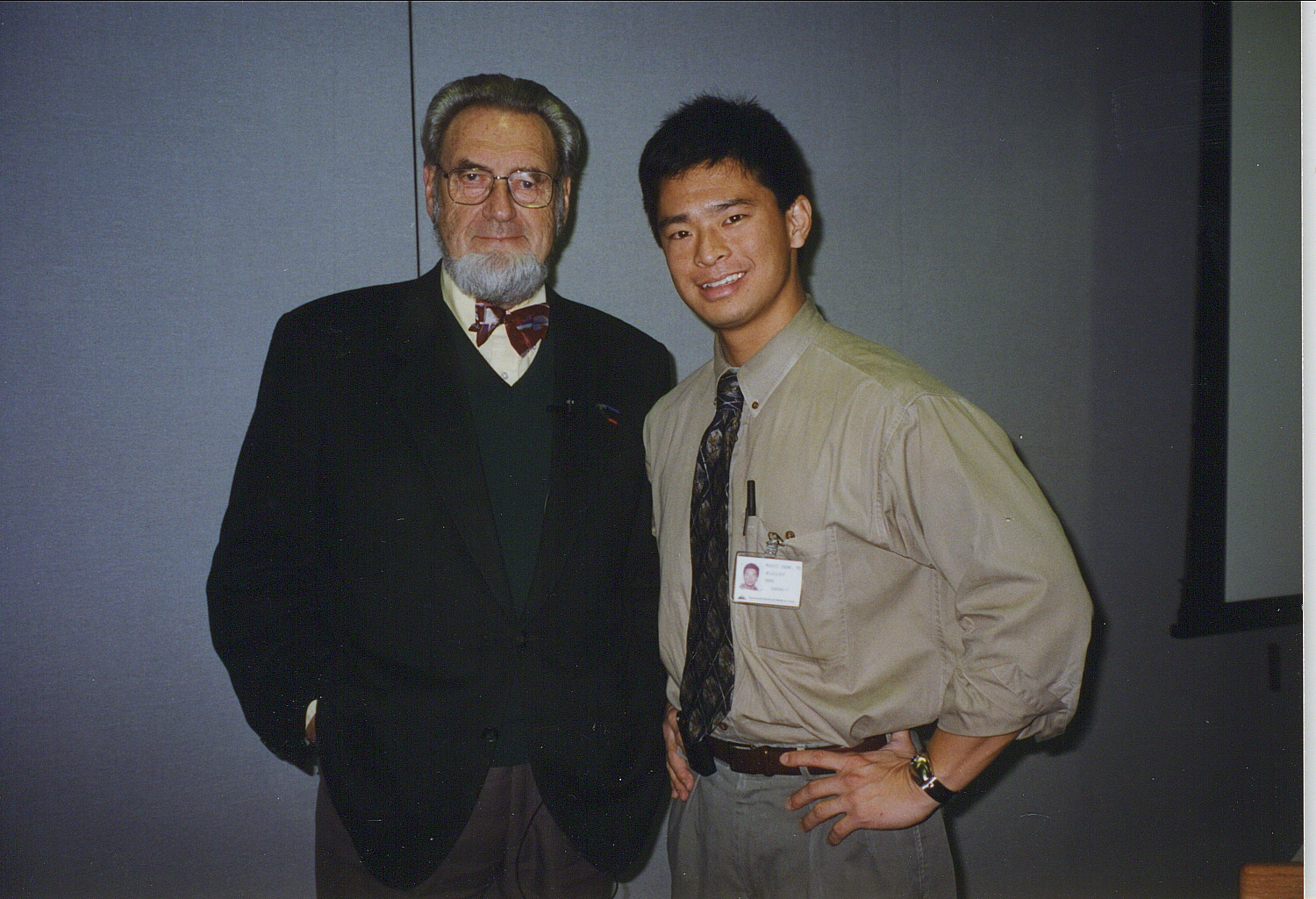
Following his service as surgeon general he eventually returned to Dartmouth, where he held professorships and founded the C. Everett Koop Institute at what is now called the Geisel School of Medicine.  I met and spoke with Dr. Koop following his lectures while I was a resident there.  His personality was as colorful as his bow ties.  I thoroughly enjoyed speaking with him and hearing his thoughts regarding the direction of medicine and the politics of the administration of health care in this country.  These issues were not otherwise routinely taught to us postgraduate trainees, and no one at the time could have dreamed about how important an awareness of health care administration would be now in the 21st century, a genuine health care crisis looming as it now is.  It was abundantly clear to me that Dr. Koop honestly cared about the welfare of all Americans.  I loved his enthusiasm and his ongoing interest in teaching, despite his advancing age.

I believe the United States would benefit from more physicians like C. Everett Koop, those who have the courage to stand up for what they believe in and what they believe to be right.  He will be missed, both in the Upper Valley and way beyond.  Sleep well, Dr. Koop.

Lessons From Hanauma Bay

I readily admit that I don’t take as many vacations as I should these days.  I can count the number of days off I took last year on my two hands.  Like many of us, I find it difficult to leave my work:  what will the place do without me, after all, and how will it possibly survive?  Taking a little time away now and then is crucial for me and my family, and the older I get, the more so it becomes.  We love to travel, but more critically, there is something vitally important about getting gone for a while:  I need a good dose of new perspective from time to time, a reminder of the reality that exists beyond the walls of my clinic.  So my wife and I decided to bite the bullet and book a trip to one of our favorite relaxation sites, Hawaii.  Our whole family needed a break, we reasoned, from hard work and this dreary Seattle weather, so off we went last week to Waikiki.  During Hawaii’s rainy season, of course.

Image

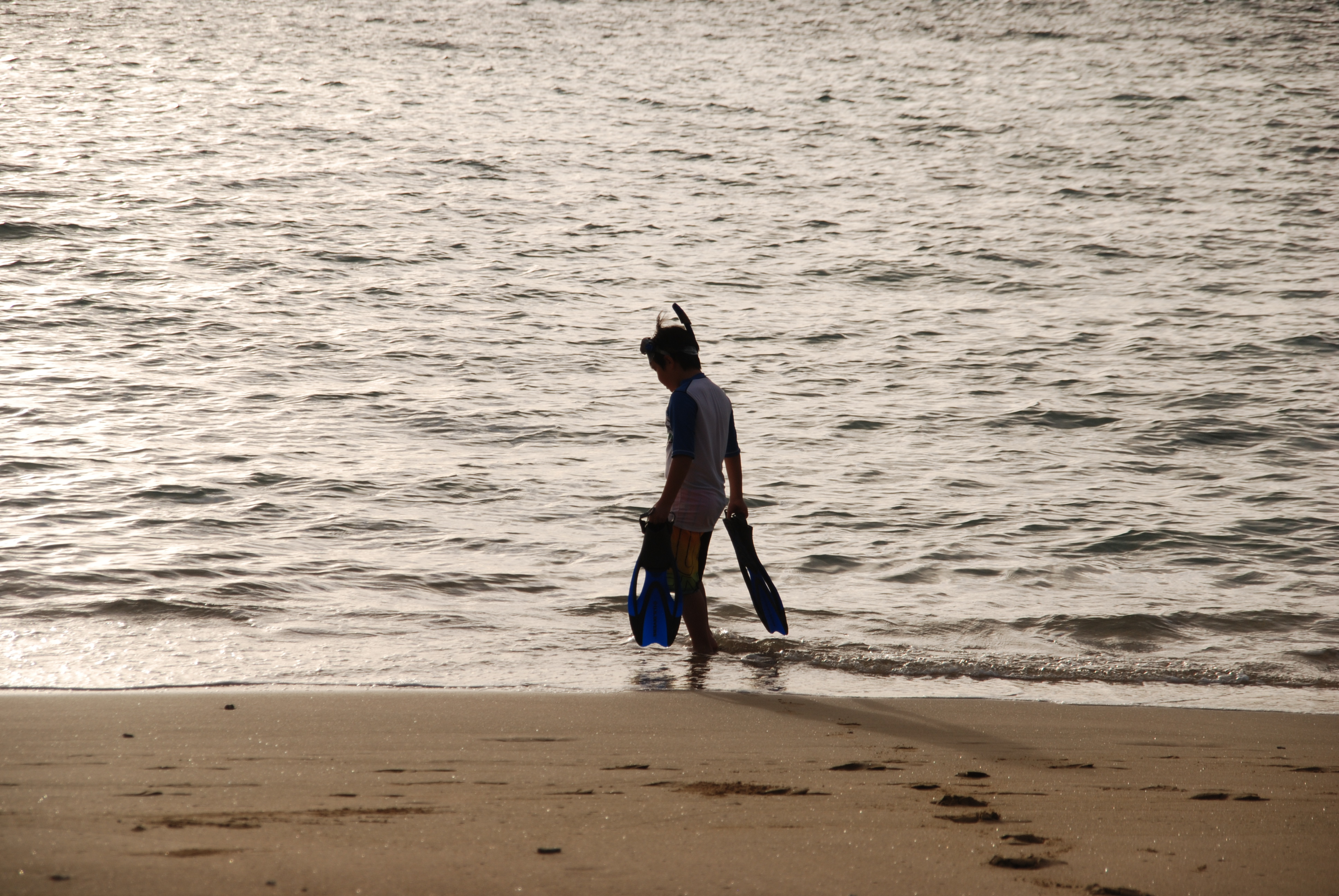
One of my favorite spots on Oahu is the acclaimed Hanauma Bay, not far from Waikiki and Diamond Head on the southeast corner of the island.  A remnant of an ancient volcano, its crescent-shaped crater is fed sea water continuously from its distal outlet, but what makes the bay truly remarkable are the huge, bountiful, finger-like shallow coral reef complexes and the multitudes of colorful sea life that take up residence there, meandering and darting through the coral structures in a beautiful, primal dance.  I’ve been to the bay several times in my younger years, and now taking my children to float above its reefs allowed me to relive that initial thrill of becoming one with thousands of bright butterfly fish, mammoth parrotfish, majestic honu (green sea turtles), delicate silver goatfish (traveling in huge schools), various surgeonfish, and countless other marine species.  Unfortunately the place is not a secret, and even in the off-season the shore sands of Hanauma Bay fill with legions of international tourists because the snorkeling is so great, but if you go early enough in the morning the beach is quiet and desolate, and for a few precious hours you and your family feel like you are the very last people on earth.

Image

Our first swim out was memorable for more than just the fish.  The tide was high and the current unusually strong.  It was difficult to progress despite my long fins and my experience in open-water diving; I could feel my muscles tensing as I strained to lead the boys to deeper water.  Then I remembered what I constantly have to remind myself of each time I slip into the ocean:  the water is bigger than me, and it’ll do what it’s going to do, whether I’m in it or not; better to accept it for what it is and go with its flow than to fight it and waste energy.  My boys were experiencing the same and worse, splashing and fighting the water’s choppy shoreward push.  So I made us stop and stand for a few minutes, waiting for the occasional brief calm in the water for our opportunity to go out further.  In this way we eventually found ourselves swimming with thousands of fish in deeper water.

I encouraged my boys to observe the fish’s movements in relationship to the waves.  We floated quietly at the surface, observing the creatures below us.  The fish, of course, were just as subject to the slow rhythms of tidal surges as we were.  We discerned a pattern as we watched.  As the tide approached, they appeared to relax their bodies and become more bendable, like colorful oval pieces of soft rubber.  A second later, an invisible plume of water sent them tumbling, rapidly but gracefully, sometimes in unison, sometimes in all different directions and angles, but never onto or against the abrasive surface of the coral.  Then, the next moment, we felt ourselves pushed forcefully by that same invisible force.  Our reactive inclination was to resist, to push back to stay in place.  But the fish teeming beneath us taught us something.  All that struggle against our surroundings, it was utterly futile.  So we stopped struggling and forced ourselves to relax like the fish.  Flowing along wherever the tide led us, we quickly found ourselves covering more ground, encountering more fish, and enjoying ourselves more, without consuming all our energy fighting the current.

You’re asking, what does this all have to do with sleep?  Well, it often is wasted energy fighting what is natural, what is inevitable, what is bigger than you.  This is an important recurring theme in my management of insomnia (as well as my blog entries), to reverse that conditioned inclination to resist, to fight, to try hard to achieve sleep, when sleep is a natural, required biological function that need not be pushed into being.  Seeking ways of allowing it to come upon you naturally generally works better than trying to force it into you.

On a broader level, though, the perpetual lesson for me is that I am constantly surrounded by forces I’m unable to control.  The changes that are happening in health care, for example–administratively, financially, and otherwise–and the even crazier changes yet to come, I am powerless to alter or prevent them.  So again, to me vacations are great for gaining and regaining perspective.  Better to relax and keep yourself limber and flexible in preparation for the inevitable next push of the tide; you may not end up in the place you originally intended, but you’re less likely to get hurt and you might even enjoy the ride.

Hmm . . . perhaps I need to start planning my next vacation soon.  I could use all the perspective I can get.

I’m back on the mainland now, so there will be more writing to come shortly.  To my readers, mahalo!

Image

Turn That Alarm Clock Around!

Howdy all.  I hope you had a great weekend!


Tonight I write briefly about a habit many millions have adopted as an integral part of their night-time routines:  staring at the alarm clock.

When you awaken in the middle of the night, it’s a perfectly natural impulse to glimpse at your clock.  It seems important to know how much more time you have before it goes off, or how much sleep you’ve gotten, or how many more hours you get to spend in bed.  However, for those with insomnia, this “clock-watching” can easily compound the frustration that comes with being awake in the middle of the night when you don’t want to be.

Here’s the typical scenario.  You go to bed, hoping you’re going to fall asleep quickly.  After a struggle and some tossing and turning, you finally manage to trundle off to sleep.  Suddenly, it’s 2:07 a.m.  You turn your head to view the clock.  The red digital numbers glare starkly at you, offering you a silent challenge:  “OK, now you know; so what are you going to do with the information I just gave you?”  You feel the frustration already gnawing at you as that precious sensation of drowsiness starts to ebb, giving way to an unwelcome wakeful feeling arriving way too early.  You turn your head forward to stare now at the ceiling, hoping the sleepiness will somehow return, but it’s too late.  The wakefulness that inevitably accompanies your exasperation is firmly planted now, dancing about in your head derisively as you try with increasing desperation to achieve sleep again.  A half-hour crawls by . . . or was it fifteen minutes?  Maybe you should look at the clock again to find out:  there’s that meeting you have to be fresh for, you have to get up at 6 at the latest, and you need that sleep badly to be in top form later in the day.  Should you turn your head toward the clock again?  A couple seconds of existential struggle later, you satisfy your need.  It’s now 2:11 a.m.

Does all this sound familiar?  Sure it does.  It’s happened, in one form or another, to virtually all of us (myself included) during our lives.  That urge, that need to gaze repeatedly at the clock can easily and naturally become a habit, an insomniac ritual.  And for some this ritual can, over time, get completely out of control, with an increasing need to look at the clock all the time, every several minutes, sometimes even several times per minute.  How is this not going to make you completely cray-cray?  I’ve had insomnia patients who have purchased those special clocks that actually project the time in huge red numbers onto the ceiling, so they can watch each minute of sleeplessness tick slowly away every night.  I do not advise this.

There are two problems with habitual clock-watching:  it doesn’t help, and it can often make insomnia worse.

Think about it.  Watching the clock doesn’t make the time go any faster; it doesn’t make you fall asleep any faster.  It only frustrates you, because every time you gaze at the clock you add a little bit more pressure upon yourself to perform, to achieve the sleep you so desperately want.  And the more frequently you watch the clock, the more the aggravation mounts.  You may not even be aware consciously of the frustration, but it’s there, creating more and more mental stimulation and making you feel increasingly awake and alert, at precisely the worst time of your diurnal cycle.

My advice to habitual clock-watchers:  turn the clock around.  If the alarm clock is working properly and if the wake-up time is set properly (you should check these prior to your bedtime), it will awaken you when it’s supposed to.  Get a second alarm clock that is battery-powered if you’re concerned about a power outage preventing you from awakening at the right time.  Your clock doesn’t care if you’re staring at it all night or not.  It’ll go off when it does.  Trust it to do that for you.  If you can free yourself from the psychic need to look and to try to control time when you can’t, you will only help yourself and increase the likelihood of eventually freeing yourself from the bondage of insomnia.

OK, folks, I am going to take a little breather from writing for several days.  I will be back at it in full force before long, however.  Sleep well, everybody!


How Animals Sleep

Sleep remains a mysterious thing on so many levels, but one thing is clear:  virtually every animal requires some form of sleep, or at least its equivalent.  Even the most simple creatures, like planaria, demonstrate regular periods of behavioral rest.


There are 4 generally accepted criteria for sleep universal in the animal world, and these obviously mirror how we understand sleep for humans as well:

1.  Little or no movement

2.  Stereotypic posture (most commonly lying down)

3.  Reduced response to stimulation

4.  Reversibility (permament sleep would be a problem)

Certain animal species can sleep in very unique ways, however.

Dolphins, for example, have unihemispheric “deep” sleep, in which one-half of the brain demonstrates sleep (as measured by electroencephalographic, or EEG, waveforms) while the other half demonstrates EEG evidence of wakefulness.  Such functional hemispheric disconnections may persist for minutes or hours at a time.  I find this endlessly fascinating.  Essentially, dolphins can truly be half-awake, half-asleep, perhaps to be able to swim and/or remain aware of surroundings or predators while at rest.


Various herbivores, like cows and sheep, can ruminate (chew and rechew cud) during sleep.


Many different animal species hibernate in order to reduce energy requirements in harsh environments.  These animals would include mammals (bears, bats, and marmots), certain birds, snakes, turtles, frogs, and snails.  How such animals arouse regularly from hibernation is among the many mysteries of animal physiology.


Some animals sleep in trees, both predators (like cheetahs) . . .


. . . and prey (such as baboons).


Adult giraffes generally don’t need much sleep.  It’s estimated that they get 1/2 – 1 hour of sleep per night, usually in very brief (5-minute) naps.  They may remain standing while sleeping.

Enjoy your weekend, everybody!  Cheers!