The Differences Between Brain Death, Coma, and Vegetative State

You may have noticed over the past week several major news stories of brain dead or comatose people, their loved ones, and their unfortunate circumstances.  For many years neurologists have been concerned about the substantial confusion that exists regarding what is meant by certain terms that are utilized by the media pertaining to types of impaired consciousness.  Brain death, coma, and vegetative state are in fact very specific terms in clinical medicine, and there are volumes of medical literature describing and discussing all of them.  So today I will take off my sleep medicine hat, put on my neurology hat, and do my best to define these terms and distinguish them from each other for you, as briefly and succinctly as possible.


These 3 terms all refer to altered states of consciousness.  They are distinctly different from conventional sleep, which is a normalpredictable, temporary, diurnal and readily reversible state of unconsciousness necessary in and common to virtually all animal species.  All 3 of these states are generally bad–that is, with very few exceptions (such as drug-induced coma to prevent prolonged and life-threatening seizures, for example)–but neurologically speaking they are associated with varying levels of badness, not only in terms of unawareness of the patient’s environment but also in terms of prognosis for eventual “meaningful” neurologic recovery (i.e., return of consciousness with abilities to function independently, engage in basic activities of daily living, and enjoy the process of life).

Coma refers to deep sustained unconsciousness.  The patient is alive, but there is no sign of conscious or behavioral movement, vocalization, or voluntary eye opening.  The patient cannot be awakened; he or she does not respond to verbal commands or other conventional stimuli.  However, physical examination may demonstrate basic neurologic reflexes and variable (usually primitive or abnormal) responses to painful (“noxious”) stimuli.  There are a great many potential causes, including stroke, brain hemorrhage, severe closed head injury, medications, hypothermia, drug overdose, and prolonged deprivation of oxygen (such as from drowning or cardiac arrest).  The chances of someone regaining consciousness and substantial neurologic function depend on a variety of factors, including the nature, duration and severity (and potential reversibility) of the underlying cause(s), the duration of the coma, and how severe the coma is based on a thorough physical neurologic examination conducted by physicians.  In general, however, if the cause is severe and irreversible, and if the patient remains comatose for a long time (such as several weeks) following an injury, the likelihood of meaningful neurologic recovery is unfortunately small, even if he or she remains technically alive.

Vegetative state is a term is so deeply entrenched in the medical and popular literature that it is still utilized clinically.  In this form of impaired consciousness, the patient episodically appears awake but does not demonstrate evidence of awareness of self or environment; some refer to this as a state of “wakeful unconsciousness.”  The patient may appear awake upon casual observation, open and move the eyes, and exhibit sleep-wake cycles.  However, voluntary movements or vocalizations and purposeful behavioral responses to conventional stimuli are not observed.  It is usually associated with severe injury to the brain and it is prolonged in duration.  Basic brainstem functions are preserved, allowing the patient the possibility of many years of life in this fashion.  Unfortunately, this neurologic condition can be confusing (and often agonizingly so) for family members and clinicians, because signs on neurologic examination, the “depth” of neurologic impairment, causes and outcomes can all be so highly variable, and because the patient appears awake, though signs of awareness remain absent.

Brain death is the ultimate badness, referring to the complete and irreversible absence of all neurologic activity in the brain.    Physical examination demonstrates an absolute lack of response to stimuli; there are no movements or reflexes.  Diagnostic tests, such as electroencephalography (EEG), demonstrate an absence of brain and brainstem electrical activity.  The patient does not breathe without the assistance of a mechanical ventilator; when the ventilator is stopped, there is sustained apnea.  If other potentially reversible “mimics” of brain death (such as barbiturate intoxication and hypothermia) are ruled out, and if brain death is certain, there is no coming back from this; there is no chance of return of neurologic function or meaningful neurologic recovery.  Though historically people have thought of death as the permanent cessation of heart function and breathing, many people and most clinicians consider brain death consistent with clinical death, even if mechanical ventilation can keep vital organs of a brain-dead person functioning for long periods of time.  The Uniform Determination of Death Act (UDDA) is a draft state law approved for the United States in 1981 and has been adopted by most states.  It defines death as “either (1) irreversible cessation of circulatory and respiratory functions, or (2) irreversible cessation of all functions of the entire brain, including the brain stem,” the determination of which is made “in accordance with accepted medical standards.”

There are several important issues to bring up briefly here.  First, it’s important to recognize that these terms may be confused with each other in the media, and sometimes even used interchangeably; be very careful of what you read and hear, and be prepared to challenge terms that are used.  Second, the clinical condition and neurologic status of the comatose or vegetative patient can change and evolve over time, and sometimes highly improbable or unexpected outcomes have been reported to occur without explanation or warning, such as spontaneous neurologic improvement following sustained coma for example; as one of my mentors once told me during my residency, “patients don’t read the textbooks.”  Finally, and importantly, there is an ongoing debate regarding the ethics of what these decreased levels of consciousness may mean for the patient, how loved ones should make decisions on behalf of the patient, and how society defines or views the concepts of death and a meaningful life over time.  These are all obviously very complex issues, affected and influenced by individual, ethnic, generational, and religious differences.  But we all–particularly those in the media–should at least strive to keep our terms and definitions as accurate and appropriately descriptive as possible, for the sake of ourselves and our loved ones.
“Why is My Mouth So Dry With CPAP Use?”

I must have struck a chord with yesterday’s post on dry mouth, given the responses I’ve received.  Dry mouth is a very common symptom associated with sleep.  So let’s continue this topic, but with a little twist.  Do you awaken with your mouth feeling dry during a night of CPAP use?

As mentioned briefly yesterday, obstructive sleep apnea (OSA) is a sleep disorder of breathing associated with episodic collapse of your upper airway while you are sleeping; sleep disruption, gasping sensations at night, witnessed breathing pauses during sleep, substantial snoring, and daytime sleepiness are common clinical features of this very prevalent but under-recognized medical illness.  CPAP (continuous positive airway pressure) is a primary form of treatment for OSA.  CPAP is an electronic device which pressurizes room air and gently sends it down the throat via a mask to keep the airway open all night.  If properly used, CPAP stops the snoring and breathing pauses, deepens your sleep dramatically, and therefore makes you feel much better and more awake and alert during the day.


Some still think of CPAP use as a primitive, invasive, or unavoidably uncomfortable medical therapy based on what they’ve seen or heard a decade or more ago; this is unfortunate, in part because many people end up foregoing medical evaluation and treatment for their sleep apnea for many years based on an erroneous perception of what their treatment may be like.  There are now dozens of mask interfaces available, each with different sizes; the CPAP devices themselves are much smaller and quieter than they used to be, with lots of bells and whistles to make them more comfortable and easier to use.  If used properly and if you are willing to use it, CPAP can be an absolute game-changer; untreated sleep apnea can wreck your life, and proper treatment can dramatically turn things around.

Having said that, though, there are lots of potential ways for CPAP use to go wrong, causing people to have difficulties using it or to stop using it altogether.  I will write about these problems more in later posts, but one problem some CPAP users may have is dry mouth.  The majority of CPAP users don’t have substantial problems with this, but if this is relevant to you or someone you know, read on.

Presuming that your dry mouth isn’t caused by one of the problems I wrote about in yesterday’s post, and if the dry mouth started or became much worse after having started CPAP, most likely this symptom is caused by oral leak or oral breathing.  Your jaw muscles naturally tend to relax when you fall asleep.  In some cases, the lower jaw (mandible) may then drop slightly due to gravitational forces.  If you are using a nasal mask (i.e., a mask that covers your nose but NOT your mouth) or nasal pillows (i.e., soft prongs which are placed gently at the entrance of your nostrils), and if the mouth opens a little, then air from the CPAP device may then divert and escape out of your mouth.  This is obviously a problem.  The air dries your saliva, first of all, causing you to awaken more from sleep with that uncomfortable, parched, “Sahara desert” feeling in your mouth.  Just as importantly, though, if air is leaking out of your mouth and escaping into the open space instead of going down your throat the way it should be, then you aren’t being adequately treated because your airway may again be predisposed to collapse due to insufficient air pressure.  So due to sleep disruption and inadequate treatment, oral leak can lead to a perception that CPAP doesn’t work because you may still feel sleepy during the day despite CPAP use.

Oral leak is a very fixable problem.  Don’t turn your CPAP device into a very expensive doorstop because of it.  Before reading how to repair oral leak below, though, make sure you’ve determined where the dryness is; this is particularly important because people often don’t actually feel the air coming out of their mouths, because the leak happens while they’re asleep (when you awaken your muscles abruptly regain their tone and the mouth usually closes).  If the sensation of uncomfortable dryness is in the nasal passages and/or the back of the throat, but NOT in the mouth, oral leak is probably NOT the problem; I would suggest increasing the heated humidity in your CPAP device if this is the case.  However, if the dryness is clearly localized to the mouth chamber–with a pasty sensation in the mouth, for example, a feeling of having to “peel” your tongue from the roof of your mouth, dryness of the lips and teeth–oral leak is then likely the cause.

1.  If you’re using a nasal mask or nasal pillows and you like your current setup, a chinstrap is usually effective.  When wrapped gently around the head, it mechanically keeps your mouth gently closed.  It does not need to placed tightly; it should be just secure enough to be effective, but not so tight it’s uncomfortable.  People usually become accustomed to chinstrap use pretty quickly.  Many straps are made of thin neoprene.  However, particularly for my patients who are more heavyset or who have larger neck circumferences, I prefer a “deluxe” or “heavy-duty” chinstrap, which is wider and made of less stretchy material and therefore more likely to be effective.  An added bonus:  in some cases chinstrap use can be temporary; over time you may find that tendency toward oral leak has stopped after having discontinued the use of the strap.

2.  Another way of addressing oral leak is with the use of a full face mask, which covers both the nose and the mouth.  There are now many different full face masks available on the market.  Potential issues with full face masks, however:  since they’re larger masks, they may be more prone to leak than smaller masks; also, they don’t keep the mouth from opening, so you can still have some dry mouth if air continues to go in and out of your mouth (though usually substantially better).  Try increasing the heated humidity (which usually comes standard) in your CPAP device should this be the case.  But if you’re already using a nasal mask or nasal pillows and you’re comfortable with your current setup, a chinstrap usually does the trick with relative ease.

3.  Finally, as mentioned in yesterday’s post, addressing problems causing decreased airflow through the nose (such as seasonal allergies, hay fever, sinusitis, or anatomic nasal disorders) may well reduce the tendency to open the mouth during sleep.  Consider a visit to your primary care physician or an ear, nose, and throat doctor should you have symptoms that suggest such problems.

Sleep well tonight, everyone, and stay warm!

“Why is My Mouth So Dry at Night?”

Many of us have experienced this problem at one point or another during our lives:  awakening with that nasty sensation of uncomfortable dryness in the morning.  Your saliva–or what’s left of it–feels like paste; there’s that funky, faintly cheesy taste in your mouth that you’re sure doesn’t smell good either.


Dry mouth, or xerostomia, can be a particular problem at night.  Saliva is necessary to protect and lubricate the structures of the mouth and throat, as well as their fragile mucosal linings, from friction, foreign particles (food), and virulent organisms (viruses and bateria).  While sleeping, your salivary glands naturally and normally slow down production of this saliva, and so in some respects it may be natural to awaken feeling like your mouth is a little dry.  In some, however, dry mouth at night or in the early morning can be a substantial problem and a source of genuine discomfort; the words “Sahara desert” and “bone dry” are often used by my patients, for example, to describe this unpleasant sensation.

There are a number of potential causes for substantial dry mouth.  Aging into your 70’s and 80’s, for example, often further slows down saliva production.  Dehydration and metabolic imbalances may cause dry mouth as well.  Certain medical disorders, such as Sjögren’s Syndrome and lupus, often are associated with dry mouth, as are a variety of different medications, such as antihistamines, certain blood pressure lowering drugs, diuretics (“water pills”), and anti-depressants.

Another important thing to think about is whether your mouth is open while you are sleeping.  For many open-mouth breathers, the lower jaw (mandible) may naturally fall a little due to a combination of gravitational effects and jaw muscle slackening while asleep; some may be predisposed to this tendency more than others, and other factors–like body weight, neck circumference, and body position(s) of sleep–may influence mouth opening during sleep as well.  However, it’s important to know if there are other problems that may cause chronic mouth opening during sleep as well, in particular things that can cause nasal congestion or other decreases in airflow through the nasal passages–such as chronic allergies, a substantially deviated nasal septum, and sinus infections.  It stands to reason that if you can’t breathe properly through your nose, your mouth may be more likely to open during sleep to maintain proper airflow.

Another problem is that obstructive sleep apnea (a breathing disorder in which the airway collapses during sleep) is commonly associated with open-mouth breathing and, hence, mouth dryness and throat and oral irritation at night or in the morning.  People with sleep apnea often snore loudly.  Now keep in mind that you can snore with your mouth or closed (try simulating snoring with your mouth open and then with your mouth closed; you’ll see what I mean), but the snoring is generally louder with your mouth open.  As a result, sleep apnea can be more noticeable to a bed partner, because the snoring is more bothersome and the loudness of the snoring provides a greater sound contrast when you sound like you stop your breathing during sleep (which is what the sleep apnea does, due to blockage of the upper airway).  So as a clinician, I actually look at the open-mouth breathing as, in a paradoxical way, a good thing:  it makes the sleep apnea more bothersome to both the patient and the bed partner, thus making it more likely to be brought to the attention of a physician (studies demonstrate that in the United States, about 85% of sleep apnea cases are still not yet diagnosed!).

So here are my first take-home points of 2014!  I recommend that you consider these possibilities if you frequently awaken with xerostomia.  Bring symptoms consistent with reduced airflow through your nose to the attention of your doctor when you speak with him/her about the dry mouth.  If your oral symptoms are accompanied by a history of substantial snoring, and certainly is someone is telling you that you sound like you’re also stopping your breathing during your sleep, I strongly urge you to discuss these important issues with your doctor and consider an evaluation by a person like me, a physician who specializes in sleep medicine.

Have a great week, everyone!


Sleep Help Desk’s Top 10 Songs of 2013!

Happy New Year, one and all!  2013 was one wild ride for me, both professionally and personally.  Kids growing up, all the uncertainty of the future of health care, Miley Cyrus’s foam finger–sometimes it’s all just too much for a guy to take.  So today, this first day of 2014, I’m going to relax before a friend’s New Year’s party and list for you my favorite tunes from last year.  There were a lot of great songs released in 2013, so I will list some great “honorable mentions” as well.  I wish everyone a happy, musical 2014!  Enjoy these songs below.

10.  Stay at Home Mother — Sheryl Crow.  I’ve never been a full-time professional musician, but I’ve played many more gigs in my life than I can count.  More importantly, however, I understand fully what it feels like to wonder how your work, work hours, and ambition are impacting your little ones.  This acoustic song, tear-jerkingly honest, heart-breaking, and hopeful, encapsulates that struggle beautifully and plaintively.  Though my boys are maturing faster than I prefer, they still ask me not to leave if I have to leave for an evening meeting or other such thing.  I appreciate and cherish that, and I hope that for the rest of my life my children will want me and my wife to “stay at home.”

9.  Hey Pretty Girl — Kip Moore.  I love songs that summarize a person’s entire life in three minutes.  This song tells the story of one man’s history with his wife, front to finish.  The guy in the song just wants what most of us want, I think–someone to love, someone with which to share the simple joys of life.  I’m drawn to the slightly off-kilter rhythm (which is unusual in country radio), the vocal melodies, the believable lyrics.  Plus, this is the first song I played after bringing my very first bass guitar home five months ago.

8.  This is What It Feels Like — Armin van Buuren, featuring Trevor Guthrie.  My boys are completely obsessed with pop music.  They demand it in the car, play it the moment they get home from school, dance to it with wild abandon at their school socials.  Accordingly, a tsunami of modern pop has been forced upon me in 2013.  Understand, pop when I was their age was “Undercover Angel” by Alan O’Day, “Beth” by Kiss, and “Chevy Van” by Sammy Johns, so what is popular now to young people sounds radically different from the music on the radio when I was coming of age.  But my curmudgeonly self must admit that there are some pretty good songs in my boys’s playlists, and here is one of them.  Like “Hey Pretty Girl” the baseline rhythm is a little atypical, but it’s very danceable nonetheless, as I’ve witnessed firsthand.

7.  I Hold On — Dierks Bentley.  This song slays me.  I identify completely with the idea of appreciating what you have and valuing the things and people that have stuck with you for years.  As time goes on your modern life becomes increasingly deluged by garish and obnoxious distractions–technology, hassles, vulture-like people–that in the end don’t hold near the meaning of a small circle of simple, rock-solid things and people that continue to have your back.  Like Dierks, “I hold on.”

6.  Anywhere With You — Jake Owen.  This song speaks to the travel abandon button I wish I could push more frequently.  You know the feeling you get when you thumb through Travel + Leisure or Islands, that wish that you could scratch your itch to travel immediately–like get on a plane right now–but you can’t because you’re looking at the magazines on the treadmill in your gym before going to work?  We love a good trip, and I’m looking forward to more exploration in the near future.

5.  Odds Are — Barenaked Ladies.  BNL still rule, after all these years, despite the departure of Steven Page.  Using their trademark humor (check out the video!) they speak deceptively simple truths.  I hold up this song as a beacon of hope for me and my fellow physicians in 2014.  I sincerely hope that, despite my cynicism regarding what so many different people and organizations are thrusting upon us in health care, “the odds are that we will probably be all right.”

4.  Sunny and 75 — Joe Nichols.  I guess this shows you where my head’s at, considering this song along with my #6 pick.  Here in Seattle in the summer it’s sunny and 75, one of the best places on the planet to spend the summer, but at the moment it’s grey and considerably cooler than 75, and there’s not a beach chair in sight.  I’ve been singing this song in the car all year, though.

3.  Elevate — The Winery Dogs.  My friend, bass master Billy Sheehan, combined with Richie Kotzen and Mike Portnoy to create this explosive supergroup, whose debut album is in my opinion easily the greatest hard rock release of the year.  There are too many great songs to choose from in the album; the relentless “Time Machine” and the sublime, bluesy “Regret” in particular were real contenders for this list.  Ultimately, however, I chose “Elevate” for its awe-inspiring riffs, technical precision, great vocals, and of course Billy’s absolutely sick bass skills.  I strongly urge you to see this trio in concert should they roll through your area in 2014.  A Winery Dogs show is a game-changer.

2.  Alma de Guerreiro — Seu Jorge.  This is Brazilian funk at its finest, chugging over a deeply embedded foundation of ijexa.  I came to know this song from performing it at a Carnaval concert last spring.  The riff is inescapable, and it’s impossible not to move under its spell.  Salve Jorge!

1.  I See Fire — Ed Sheeran.  Put Peter Jackson, Malcolm Gladwell’s David and Goliath, and the traditional Celtic song “The Parting Glass” in a blender and you have this powerful piece, which sings of a fool’s hope in the face of relentless malice and terrible odds.  It’s hard for me not to draw parallels between the song and what is happening on this planet at the moment, but I’m choosing simply to enjoy this apocalyptic track for its dark acoustic brilliance.

Here are some honorable mentions from 2013.

Brainwash — La Luz.  Seattle all-female surf rock quartet.  Great stuff.

Tippin’ Point — Dallas Smith.  Modern Canadian country at its finest.

Wake Me Up — Avicii.  Another impossibly catchy song introduced to me by my pop-lovin’ sons.

Follow Your Arrow — Casey Musgraves.  She has some stones to sing about what she sings about.  More power to her for speaking the truth.

Whatever She’s Got — David Nail.  This was an ear worm all autumn long.

Opiates — Throwing Muses.  Kristin Hersh is a genius.

Didn’t Mean to Fall in Love — Boston.  It is great to hear Brad Delp’s voice again.

Happy 2014!


“You’re Gonna Hear Me SNORE!”

I hope your holiday season has been great so far!  And it’s not over yet!

I recognize I’m posting this video late–it aired originally during the Thanksgiving holiday–but it’s worth posting now anyway; we’re still in holiday mode, after all, aren’t we?, and lots of people eat turkey at Christmas time!  Jimmy Fallon, Rashida Jones, and Carrie Underwood gave a hilarious musical performance about Thanksgiving traditions on Late Night With Jimmy Fallon.

Please pay particular attention to what Rashida sings 1:29 into the clip.  She parodies Katy Perry’s song “Roar,” singing, “you’re gonna hear me SNORE!”

Drowsing and falling asleep in front of the television or fireplace after a big ol’ hyper-caloric meal are so common, they seem like natural components to our American holiday tradition.  The degree to which L-tryptophan in the turkey triggers an after-dinner snooze is questionable, actually.  However, there are so many reasons for sleep to take you over after a huge holiday meal:  sleep deprivation due to wrapping things up at work; family and friends coming into town; irregular work and sleep schedules; parties keeping you up late; alcohol, particularly when combined with certain medications; underlying medical problems; and undiagnosed sleep disorders.  Untreated sleep apnea, for example, may leave you both sleeping and snoring like a bear in your recliner, disturbing your house guests.

It’s always easier to say than to do, but keeping your sleep schedules as regular as possible and getting proper amounts of sleep during the holidays may well improve your levels of wakefulness and alertness during this time of year and may bring forth even more holiday cheer!  Have a great holiday week, everyone!

New York Train Derailment Thought Related to Operator Fatigue

Well, what many of us in the sleep health sciences feared might be the case appears to have been confirmed:  the operator of the New York commuter train that jumped off its rails early Sunday morning, December 1st, reportedly told federal investigators that he had “nodded” and “zoned out” just prior to the derailment.


The crash, which occurred in the Bronx and resulted in the death of four passengers and the injury of dozens, occurred when the train passed through a sharp turn at speeds much higher than recommended:  according to reports from the National Transportation Safety Board, onboard recorders clocked the train to be moving at a blazing-fast 82 miles per hour just prior to the crash (the speed limit at the track curve was 30 miles per hour).  Data also reportedly demonstrate that brakes were applied heavily and the throttle cut shortly (five seconds) before the locomotive and all seven coaches jumped off the tracks.  Reportedly, the train driver, 46 year-old William Rockefeller, told NTSB investigators that “I was in a daze” just prior to the crash.  Investigators appear to have have concluded that Rockefeller likely had experienced a “microsleep,” dozing briefly while operating the train.

I don’t know Rockefeller’s personal circumstances that may have been associated with this tragic incident.  But I can tell you in general terms is that excessive daytime sleepiness is a very common, under-recognized problem, one with the potential for huge adverse consequences for people who work in various industries, particularly ones that require substantial mental attention and high degrees of performance and concentration.  The medical literature abounds with data regarding the extent to which work performance may deteriorate with chronic sleep deprivation, for example.  As one may imagine, such mental deterioration may then lead to industrial accidents and fall-asleep vehicular crashes.  It is well known that excessive daytime sleepiness is associated with reduced performance and human error due to:

Slow or defective information processing
Non-response and/or delayed response
Slow (increased) reaction time
Reduced vigilance
Decreased situational awareness
Lapses in judgment
Reduced accuracy of short-term memory
Accelerated decrements in performance

There are several important problems associated with addressing the issue of excessive daytime sleepiness.  First, sleepiness during the day can be caused by all sorts of things, including deliberate sleep deprivation, irregular or rotating work schedules, jet lag, medications, alcohol, insomnia, or intrinsic sleep disorders such as untreated obstructive sleep apnea.  Second, daytime sleepiness is often insidious; it creeps up on you ’til before you know it, you’re struggling to stay awake and alert during the day every day.  Third, daytime sleepiness is not painful (until you get into a car wreck, of course), making it less likely that people will seek to have the problem evaluated by a health care professional.

So I’d like to provide some quick and dirty rules for you, in light of this most recent tragedy.

1.  Do what you can to get proper amounts of sleep.  The vast majority of adults require between 7.5 and 8 hours of sleep per night.  If you’re sleep-deprived, try going to bed tonight a little bit earlier than usual, like by 10-15 minutes.  A couple nights later, go to bed 10-15 minutes earlier than that.  Gradually increase the total amount of sleep per night, to as close to 7.5 to 8 hours per night as possible.  If you suddenly go to bed a couple hours earlier than you usually do, you may experience insomnia, and you may well end up going back to your usual pattern of sleep deprivation.

2.  Do what you can to get proper amounts of sleep regularly, i.e., as close to every night as you can.  Your body clock “wants” you to be regular in terms of your bed timing.  If you tend to “sleep in” on non-workdays, for example, the very fact that you are sleeping in may be an indicator that you need more sleep during other times of the week than what you’re allowing yourself to have.

3.  If you are struggling to stay awake and alert during the day despite proper amounts of sleep at night, seek medical attention.  You may want to see a person like me, a physician sleep specialist, if that is the case.

Sleep well, everyone, and stay safe.


Woman Sleepwalks Onto Subway Tracks

Stories like this one from yesterday seem far too common these days.  Here is some remarkable surveillance camera video recently released, demonstrating a Boston-area woman ambling slowly forward and right into a subway station pit and onto the subway tracks.

Amazingly, this woman wasn’t seriously injured in the incident, and by report she later told authorities that she had fallen asleep on a nearby bench and that she probably sleepwalked onto the tracks.  According to the clock on the video, this incident took place at 8:41 in the morning.

Here’s just a brief word on sleepwalking, a fairly common phenomenon particularly in children, teenagers, and young adults.  Sleepwalking is a form of non-REM parasomnia–in other words, an unusual movement or behavior occurring during or immediately out of non-REM sleep (i.e., non-dream sleep).  Such events tend to occur more frequently if you are in a position in which you tend to have a lot of deep non-REM sleep (such as if you are sleep-deprived) or if there is something in or around you that causes abrupt arousals from sleep.  In the case of this particular woman, I have not been able to find a lot of specific information in the media pertaining to why this incident occurred, but if she had fallen asleep waiting for her train around 8 or 9 in the morning, chances are probably good that she had been sleep-deprived (otherwise she probably wouldn’t have fallen asleep there in the first place), and being in an environment with lots of loud noises (have you ever been in a T-station in or around Boston?), well, this seems like a set-up for a possible sleepwalking event.

Our modern world is crazy.  Our lives are fast and furious; we work hard, we study hard, we play hard.  But our busy lifestyles don’t make the need for sleep any less important.  Most adults need around 7.5 to 8 hours of sleep per night to feel fully rested.  Ask yourself how often you are making time for that much sleep at night.  My main take-home point for you this afternoon:  getting proper amounts of sleep, and regularly, may prevent a whole host of potential problems during the day, ranging from reduced work productivity to fall-asleep car crashes to unusual behaviors such as sleepwalking.  And perhaps getting proper amounts of sleep each night may even save your life.


Sleep well, everyone, and stay safe!

My Favorite Country Classics–No, Really

From time to time, I write about topics that have absolutely nothing to do with sleep medicine or doctoring.  This is one of those posts.

The other day my 9 year-old asked me, “So what makes a country song a country song?  Besides the accents, I mean.”  He sure knows how to start a conversation.  I started off by explaining the mechanics of what gives the sonic qualities commonly identified with country music:  the instrumentation (banjo, fiddle, and a “steel ride that’s so strong it sends chills up your back”); the cadence and groove of the rhythms (whether they be swing or straight 4:4);  the vocal melodies and bass lines informed by blues, bluegrass, and spiritual roots.  However, I spent most of my time talking about what, in my opinion, really makes a song country:  the lyrics, which tend to tell stories–stories that most listeners can relate to easily at least on some level.  The unique combination of sounds and narratives is what makes country music an indelible part of the fabric of our culture, and so characteristic and representative of American life.  I thoroughly enjoyed this conversation, which triggered some of my oldest and most cherished memories.

page-0

I was born and raised in the midwest.  Cliché as it may be, my earliest memories do in fact include corn fields, deeply sharp cheddar cheese, cow manure, silos, and Kraft carameled apples at Thanksgiving.  Radio listeners in south central Wisconsin at that time had two choices:  National Public Radio or country/western music.  Talk radio was boring when you’re 4 years old, so I naturally gravitated toward the music.  My first musical memories were not nursery rhymes, but Roy Acuff, Hank Williams, Ernest Tubb, Hank Snow, Red Foley.  My parents did the best they could to nourish my budding musical interests.  Some weekends we would brave the snow and drive from Whitewater to Janesville, where there was a K-Mart.  K-Mart was a wondrous place.  Brightly lit and smelling of candy and popcorn, it housed all my favorite stuff.  The snack counter was way over there; the plastic dinosaur figures were over there; the fish and turtle tanks were over there.  And there, just off to the right, was the music isle, big black records filled with music waiting to be heard.  Every once in a while we’d return home with a new country album, which I proceeded to wear out from endless listenings.

If you’re a country fan, you know that country has passed through multiple eras in its long, rich history.  I’ve loved many of these eras, but my favorite classic country songs span from the late 1950’s to the early 1970’s, when spare western tunes were gradually overtaken by more lush songs with stronger harmony vocals, orchestral flourishes, and electric slide guitar.  And as always, the songs that stuck to my gut the most were the ones that told those great stories, plaintive tales of love, loss, and American life.  Millennials may have difficulties imagining a world without smart phones, internet, or video games, but it is precisely that, imagination, that we children relied on to supplement the quality of our lives in those days.  These songs gave me the opportunity to exercise my imagination, thus becoming a gateway to great adventure and exploration.  Although I was too young to comprehend many of their themes fully, I captured my first glimpses of independence and adulthood through them.

Eventually, growing up and relocating to a city (Wichita, Kansas) triggered a move away from country for more exciting pastures (rock and metal! jazz and fusion! alternative! world music!), where I meandered joyfully for decades.  However, my intense love for music has deep, unmoving roots:  the country music I fell in love with years ago.  In recent years, I have come full circle and discovered “new” country, which I will write about in an upcoming post.  For now, however, just because I can, because I’m in a nostalgic mood, and because as a scientist I can’t resist an attempt to quantify the unquantifiable, I will list here some of my favorite songs with which I grew up.  There are just so many great songs I love, and I’m sure that if I re-do this list a year from now it’ll look quite different.  But here today–and sure to make some of my more head-bangin’ friends recoil in horror–I present, Letterman-style, my top 10 country classics, from the perspective of a wide-eyed, music-lovin’ midwestern elementary school boy.  If you have a spare couple minutes, I invite you to explore a little American history–my history–through song.  As Gentleman Jim Reeves once sang, “welcome to my world.”

10.  Smoke! Smoke! Smoke! (That Cigarette)Tex Williams.  My dad smoked; everyone did, it seemed, in the late 1960’s and early 1970’s.  I used to love opening Dad’s pipe pouch, pulling out a big wad of moist, flaky brown/red tobacco, bringing it up to my nose, and taking in its rich, woody fragrance.  However, when it came to the actual smoke itself, I remember nothing but how vile it smelled; it permeated the house, particularly after dinner, when Dad would relax with his pipe.  There was no complaining about it, nor were there inklings to complain; the smoke was just a normal component of family life, as routine and inevitable as the sun rising and setting.  So I was intrigued to discover–by listening to this classic novelty song–that a grown-up shared my disdain for the stuff, even though he himself “smoked ’em all my life, and I ain’t dead yet” (indeed, Willliams died in 1985 at the ripe ol’ age of 68).  Luckily, I never became a “nicotine slave” later in life, in part due to this song.  Thanks, Tex!

9.  L.A. International AirportSusan Raye.  From Dolly Parton’s “Jolene” to Loretta Lynn’s “Woman of the World” to Minnie Pearl’s “How to Catch a Man,” myriad country songs have chronicled the longstanding struggle for female empowerment and the woman’s complex relationship with the man.  I couldn’t have cared less about any of that, however, when I was 6.  Big jet engines and exotic travel, on the other hand:  who needs some kooky relationship with a man?  Despite my youth I could sense the melancholy in this otherwise cheerful-sounding song, but all I could focus on was being at that huge airport, wherever “L.A.” was, 747’s roaring all around while I watched all these strange, unfamiliar people, like college kids trying to make their way home.  Way home from where?  I obtained my private pilot license when I was 17.  This song is my first memory of wanting to fly.

8.  Walk On ByLeroy Van Dyke.  Hilariously, I thought this song was just about encountering a friend during a casual stroll down the street.  It is, in fact, a song about a secret love affair, but it never occurred to me to wonder why the singer was telling the woman that he loved her but that they had to pretend they didn’t know each other in public.  What I recall mainly is simply enjoying the melody, the pleasant ambling shuffle, and the notion of standing on a street corner hanging out.

7.  El PasoMarty Robbins.  Marty was famous for his fictional tales of the Old West.  This one is my favorite.  As a young boy, of course, I was more interested in the gunfights and all the blood in the street than the love story about Faleena.  I also loved the vocal harmonies, the beauty of which contrasted sharply with the harsh, tragic lyrical content.  El Paso is a great example of how much can be conveyed in one short song.

6.  A Boy Named SueJohnny Cash.  I LOVE Cash.  Always have, always will.  I genuinely mourned when he died in 2003.  He’s the first music star I remember actually seeing and admiring visually, having watched him host the Country Music Awards in 1973.  There are so many great Cash songs burned permanently into my brain, but I suppose this one remains my favorite.  Its story is completely absurd, dark and funny at the same time, and I was able to comprehend its implications despite my age.  It made sense to me, years before that mangy “Morris the Cat” feller came on the scene and caused me sixteen tons of trouble.  Today I raise my children to do their best to stay sharp and learn how best to survive in this harsh world, even though I named neither one of them Sue.

5.  The Three BellsThe Browns.  Like another favorite of mine, Ferlin Husky’s “Wings of a Dove,” this song runs on the same Christian themes I grew up with in Sunday school, but once again it was its story that drew me in more than anything else.  I’ve always loved the concept of  a narrative of a fictional character’s entire life in a single song (a rich tradition that carries on today; Kip Moore’s “Hey Pretty Girl” is a very recent example).  As a boy pondering this story of little Jimmy Brown, I wondered what my own path would be, where it would take me, and whether my soul might also some day wing its way to Heaven.

4.  Detroit CityBobby Bare.  We traveled all over Michigan when I was a boy.  I remember well our family outings to Muskegon Lake (with my dad’s friend, Uncle Jerry, and his family) and East Lansing, but I have no childhood memories of Detroit except the images derived from this classic.  And man, the images in my head weren’t pretty.  I pictured our poor protagonist crying at the auto plant, sobbing at the bar (see 2. below), and curling up in a ball crying in his bed at night, pining wistfully for home.  There was something vaguely comforting about listening to a grown man express such misery, loneliness and pain so openly:  the story made me feel better about having my own moments of sadness and other emotions to which even the happiest of people occasionally may be prone.  I felt sorry for the guy, truly, but ultimately I was glad as all git-out that I wasn’t him.

3.  From a Jack to a KingNed Miller.  I recognized that this song had something to do with love, but I mainly enjoyed listening to ol’ Ned sing about face cards.  I remember wondering if the “game” that he feared losing referred to something other than just a round of poker.  And who was this Lady Luck, anyway?  Was she the same person as the Queen?  Anyhow, I loved the melody, shuffling cadence, and vocal line of this short but sweet song.

2.  Rednecks, White Socks and Blue Ribbon BeerJohnny Russell.  What the heck is a bar to a 7 year-old?  I loved this song and I played it over and over, working hard to imagine what the place was like.  I still see the images in my head, the very same ones I formulated as a boy:  cramped and dark, a neon PBR sign flashing through a haze of orange smoke off to the right (I used to see those cheap plastic signs at our neighborhood supermarket; I must’ve put 2 and 2 together), a wood, leather-trimmed bar off the left (Uncle Jerry’s bar, actually, from his Michigan cabin), a pool table with balls and a couple cues scattered across it.  One thing I could not figure out, however:  what the heck are all these weird people doing there, anyway, this “4:30 crowd?”  Do they want to be there in the first place?  Is someone making them be there?  The actual purpose of a bar was one of the big mysteries of my childhood.  For some reason all the grownups I asked never gave me satisfactory answers to my questions.

Ready for my all-time favorite classic country song? . . .

1.  Yesterday When I Was YoungRoy Clark.  As a boy I spent hours analyzing this song.  I remember laboring over its meaning and struggling to understand the underlying theme of its lyrics.  My tender little brain was awash with questions.  Wait, what does he mean, yesterday?  Of course I was young yesterday!  Or is Roy singing about himself?  He wasn’t young yesterday!  He’s old!  Was he singing about remorse over having done something particularly heinous earlier in life, or was he simply aging and expressing natural regrets that people inevitably have when they become old?  And if the latter, does that mean I’m going to feel this way when I become old?  Will I hate myself someday for being happy now?  What are “arrogance and pride?”  Are they good or bad?  Why doesn’t he explain these things?  Why does he have to “pay for yesterday?”  There were so many intriguing, unsettling contradictions within:  love and destruction, wild pleasures and pain, songs that will never be sung, friends that drift away.  It wasn’t until as an adult, of course, that I came to understand the bare truths of this stone cold classic:  life is short, dummy!; don’t squander your youth; seek to understand and accept your mortality; don’t fool yourself into thinking that you’re going to be young and bulletproof forever.  These are warnings you cannot hope to comprehend truly until you are older than young, even when they are sung to you a million times.  However, Yesterday When I Was Young forced me to think and ask questions about such principles of humanity as a little boy, which is about as close to becoming enlightened as was possible at the time.  When I met Roy Clark many years later, as a young man, I was too star-struck to remember to thank him for this musical gift he bestowed upon me yesterday when I was young.

Some time soon I will write about my thoughts about contemporary country music (with another top 10 list!), which is in many ways very different from these classics.  ‘Til then, “one little kiss and Faleena goodbye!”

A Connection Between Exercise and Sleep

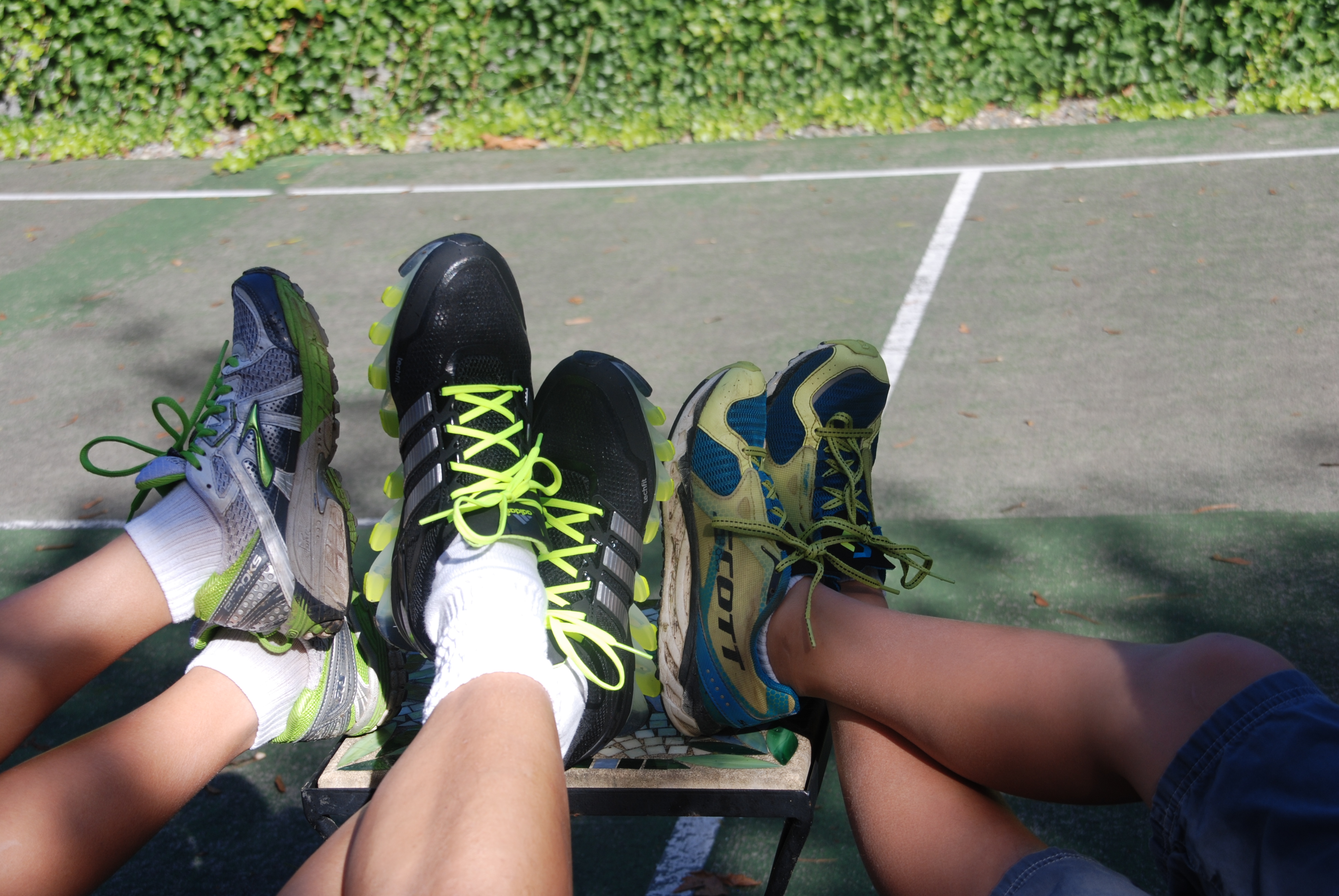
I’m a proud dad today.  Yesterday my boys both ran their first 5K race.  One, who turns 12 next March, outran me by an entire minute!  I’ve told my boys for years now that one of my goals is for them both to end up being better than me at everything, and that’s starting to happen now!

DSC_0260

A lot has been made of the relationship between exercise and quality of sleep over the years.  Recently, the 2013 National Sleep Foundation Sleep in America poll demonstrated “a compelling association between exercise and better sleep.”  Paraphrasing the data, those polled who did not exercise regularly indicated their sleep quality was “very bad” as compared to those who exercised regularly by a substantial margin:  14% as compared to 3-4%.  In addition, 76-83% of those who exercised regularly felt their sleep quality was “very good” or “fairly good,” as compared to 56% of those who did not exercise regularly, despite insignificant differences in sleep duration between the two groups.  These data and additional data from the poll support the longstanding idea of an association between good sleep habits and a lifestyle involving regular exercise.

We all know that regular exercise has been associated with improved overall health across a wide spectrum of parameters, ranging from cardiovascular fitness to mood.  Here are a couple simple exercise tips as pertains to your sleep:

1.  Exercise in the morning in general can help sleep quality and reduce the amount of time it takes to fall asleep once in bed at night.

2.  Though the notion of whether late-night exercise is detrimental to sleep has been challenged in recent years, I still recommend to my patients that it’s likely best to avoid intense aerobic exercise within 1-2 hours prior to their projected bedtimes; heavy aerobic activity can promote the release of stimulatory hormones.

3.  Consider exercise outdoors early in the morning.  The combination of aerobic activity and light exposure early in the day can further increase levels of wakefulness during the day and quality of sleep at night.

4.  Keep in mind:  the promotion of great sleep habits and hygiene originates from the same mindset that generates a schedule that includes regular exercise:  discipline to maintain a lifestyle geared toward good health, happiness, and longevity.  Use the same discipline for your sleep as you do to get yourself to the gym.  Stay regular with your sleep times and sleep scheduling.  Awaken around the same time every morning to the extent that you can.

5.  Your exercise tolerance and energy levels probably will improve with proper amounts of sleep every night!  Obey your body’s intrinsic need for sleep; most adults require around 7.5-8 hours of sleep per night, regularly, to feel fully awake and alert during the day.

Stay healthy, everyone!


How I Remember 9/11


“This must be a joke,” I muttered.

My alarm clock has gone off at 6:30 a.m. virtually every morning for years now.  I follow my own clinical advice and do everything I can to keep my sleep schedules regular, including on weekends.  The morning of September 11, 2001 was no exception.

The alarm provoked my arousal at its usual appointed time.  As my waking cortex struggled to climb out of its sleepy haze, I listened lazily for a few moments to the muffled words on the NPR station to which I kept my clock radio dialed.  I could tell immediately something was different this morning, even prior to my comprehension of the words.  There was an urgency to the voices, staccato, quick and breathless, unscripted and frightened.  Whatever was the topic at hand, this clearly was not a normal news day.  Then the words started to register in my brain:  “planes,” “World Trade Center,” “attacks,” “explosions.”

My first coherent thought was that what I was hearing was a hoax, a modern-day War of the Worlds.  A couple minutes of listening and then the first images on television terminated any hopes I had that it was so.  I jostled my wife awake and the two of us stared at the TV in mute, open-mouthed horror.  At that moment, I knew our country would never be the same.

My brief drive to work–under beautiful cloudless blue Seattle skies eerily similar to those above Manhattan that same morning–was a blur.  I walked into my clinic.  Not a single person said a thing.  We all just looked at each other in disbelief, our eyes all saying to each other, what is happening to our world?  

Not surprisingly, few of my patients chose to show up to clinic that morning, so I had some extra time on my hands.  I and my co-worker, Lamont, found our old little rabbit-eared lab TV, and we spent most of the morning staring at the fuzzy images, still trying to comprehend it all.  Needless to say, I didn’t sleep very well that night and for several nights thereafter.  Neither did my patients.  In the months to follow, I was bombarded by insomniacs filling my clinic.  The entire country suffered from collective insomnia as well as collective grief.

During my life there have been several events that I remember with clarity, defining moments in our country’s history.  I remember lying on the front bench of our family’s big ol’ sedan, watching my father stare at the AM car radio as Nixon’s resignation was announced.  I remember being in class hearing about John Lennon’s assassination and Ronald Reagan’s near-assassination.  In college I stood in a crowd in our student lounge after morning classes, watching images of Challenger exploding on television.  9/11 was one such moment, of course, and probably the most notable single historical event of my working adult life.  Twelve years later, it remains difficult for me to believe that such a thing even happened.

I must admit I grumble about some things from time to time:  the miserable state of our country’s health care administration and reform; traffic; the interminable meanness and passive aggression of some people; all the hassles and noise of modern life.  Each 9/11 brings me back to center, reminding me of how privileged I am to be alive now in this time and place, enjoying the family, friends, and prosperity with which I somehow, undeservingly, have been blessed.

As it is for millions of other Americans, 9/11 is and always will be a day of reflection for me.  As horrific as 9/11 was, it did crystallize in my mind some of my life’s most basic philosophies:  love fiercely, live boldly, and protect yourself and those you love from those who seek to harm you, whether they be silent or loud in their intent.