“What’s With This Big Body Jerk Out of My Sleep?”

Tell me if this has ever happened to you.


You’re lying on your couch one night, watching a movie. An hour into the show, you gradually start to drowse. Your eyes are getting heavy; it’s increasingly hard for you to concentrate. You want to keep watching, but finally you start to give in: your eyes are closing.  A familiar, dark, fuzzy, comfortable sensation enshrouds you, mixed with a vague feeling like you’re falling into some kind of void. There is a brief reverie; you are asleep. Then, shortly thereafter and out of nowhere, BOOM! There’s a sudden shock-like sensation and an abrupt awakening. Your entire body jerks violently, like someone sucker-punched you, but there is no pain. That singular jerk almost sends you off the couch. The person you’ve been watching the movie with looks over, wondering what the hell is wrong with you.

Sound familiar? Most (up to 70%) of us have had that experience at one time or another in our lives. This phenomenon is called a hypnic jerk, or sleep start. Much is not understood about why or how it occurs, but a hypnic jerk consists of a single, sudden simultaneous contraction of multiple body muscles, basically the manifestation of a full-body reflex occurring shortly upon entering light stages of non-REM sleep and resulting in a sudden arousal from sleep.

Hypnic jerks tend to happen more in the setting of sleep deprivation or irregular sleep schedules. I vividly recall that during my residency training days, I abruptly awakened with these jerks all the time, probably because of the frequent sleep deprivation to which I was subjected at the time. It drove me nuts. Now that I’m allowed to get my 8 hours per night most of the time, only rarely now do they occur.

There are several reasons why it’s worth writing about hypnic jerks. First, some people freak out about them. The jerks in and of themselves generally are benign and aren’t harmful per se. Secondly, some may wonder if the jerks indicate an underlying medical problem, such as epilepsy. A generalized convulsion that involves jerking movements of the entire body are usually associated with repetitive jerking instead of a solitary body jerk, and you would be unconscious during the seizure. Finally, if the hypnic jerks are frequent or bothersome, there is often something that can be done about them. If you’re chronically sleep deprived, do what you can to gradually increase your total sleep time per night; most adults require about 7.5 – 8 hours of sleep per night. Regulate your sleep schedules by awakening around the same time every morning, including between workdays and non-workdays. Consider tapering down things that can disrupt sleep, like caffeine or alcohol. Sometimes stress or particularly strenuous activities late at night may also increase the likelihood of having hypnic jerks, so relaxing prior to your bedtime may be helpful as well.

Have a great weekend, everyone!

Post-Traumatic Stress Disorder and Sleep: My Interview With Captain Ken LeBlanc

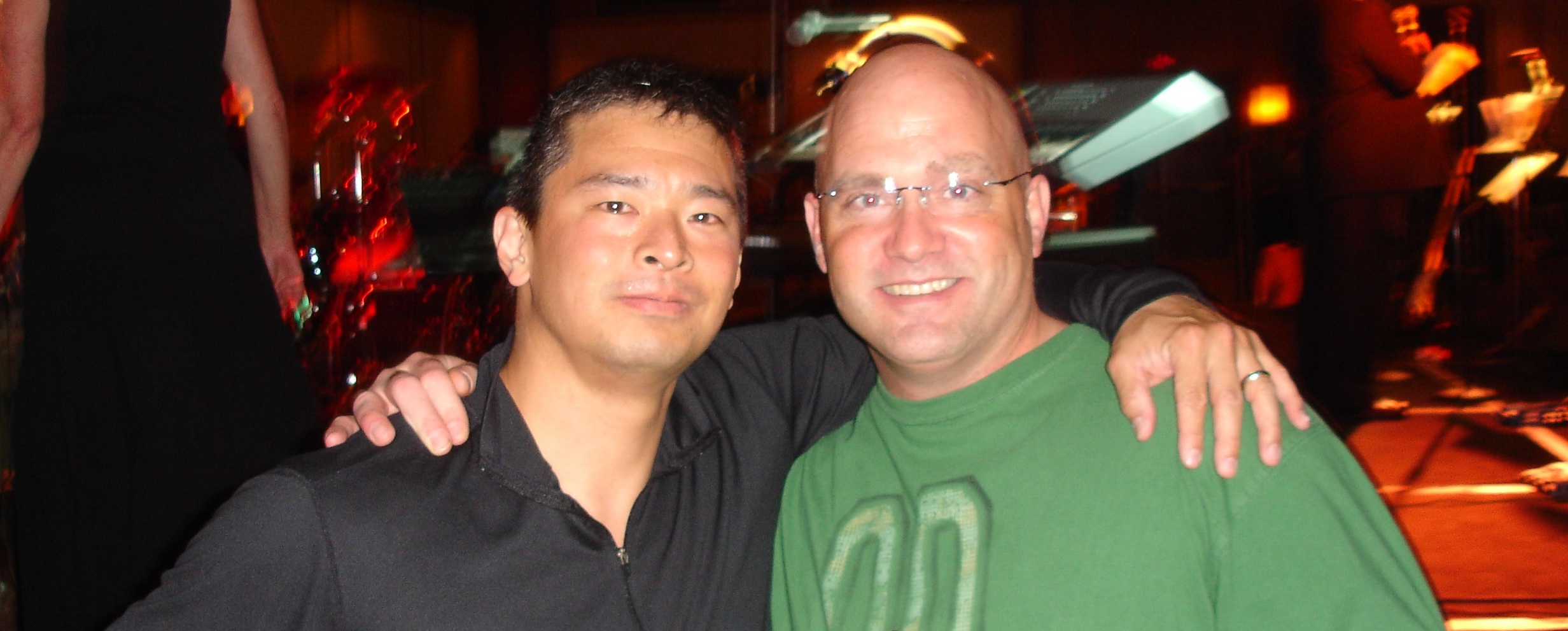
I want to tell you about my old and dear friend, Ken LeBlanc, a Captain in the United States Army. Ken and I went to high school together and have watched our lives and careers evolve in recent years.  He lives in and is stationed in Wiesbaden, Germany, near Frankfurt, and he works at US Army Headquarters for the G-34 Force Protection Directorate at Wiesbaden Army Airfield.  He is an Operations Officer.  His responsibilities include the entire Black Sea region of eastern Europe. He assesses and mitigates risk by developing site-specific guidelines for force protection and personnel safety, including counter-surveillance, stand-offs, and personnel access.  He develops travel guidelines, working with the DIA and Department of State for any individual and group travel to foreign lands. He has been deployed several times.  I consider Captain LeBlanc a hero, not only because of what he’s done for the benefit of our country, but also how he has handled the many intense experiences he has had as part of his military duties over the years.

Image

Ken tells me that he has had some genuine difficulties with his sleep since relocating to Germany.  Troubled by vivid dreams, he suffers from disrupted sleep, frequently awakening with a sensation of anxiety and in a cold sweat.

Ken has been diagnosed with post-traumatic stress disorder (PTSD).  He tells me that he’s not alone:  many of his colleagues have had similar symptoms upon returning from their deployment and have been diagnosed with PTSD, reflecting recent Veterans Administration reports that indicate that nearly 30% of VA patients who served in the Iraq and Afghanistan wars have been diagnosed with this disorder.  He also believes that PTSD is still under-recognized and under-treated in the military.

PTSD is commonly associated with sleep problems, often stemming from a combination of factors:  the self-protective mode of constantly being “on alert,” worry, physical symptoms (such as chronic pain) associated with previous trauma, and frequent nightmares which may or may not be directly related to previous traumatic experiences.  Chronic sleep-onset and sleep-maintenance insomnia and daytime fatigue are commonly observed in those suffering from PTSD.

Captain LeBlanc was kind enough to agree to describe some of his experiences with Sleep Help Desk from his home in Wiesbaden.

MC:  You’ve been in the military for many years, Ken; you’ve visited many countries and you’ve seen many things most Americans never will see. How does a soldier process all of the intense experiences such as the ones you’ve had?

KL:  If possible, by processing the good and bad with groups of others. The Army has many specific programs to help deal with and process activities and experiences. As an Officer I have a duty to help younger Soldiers with any issues that might arise from their combat- and noncombat-related experiences. Sometimes being far away from your family causes things to happen such as divorce and bankruptcy, and this can be as difficult to process as combat. As Soldiers one hopes that the foundation they have morally and psychologically helps them to diffuse critical events but being with like-minded others brings a support system unlike any other I have been involved with.

MC:  How do you perceive your experiences have affected your sleep?

KL:  Sleep is a critical and performance-altering behavior. I am an older Soldier who has witnessed many things younger Soldiers have not experienced and I’ve thought from the very beginning that this would be my personal asset. They aren’t, however, like good experiences (like the birth of a child or success at work), which do not replay in your head during times of attempted sleep. It might be thunder or loud noises or strange noises, but they all bring me back to unfavorable experiences. Dreams become more vivid and after awakening one goes through a litany of questions concerning that event. After a few months it gets a little better but when one least expects it one might dream of something as innocuous as a large crowd and begin to feel the anxiety that accompanies it. My military experiences cause many sleepless nights because after waking up (usually in a sweat) it becomes hard, if not impossible, to regain drowsiness and fall back to sleep.

MC:  So let’s talk more about your dreams, Ken.  How often and how intensely do your dreams relate to your current work or previous military experiences?

KL:  After returning stateside I had incredibly vivid dreams every night. I would wake up and go through them repeatedly. I would feel foolish for having them. Most of the time they relate directly to military experiences but after a while they lose that flavor and start to relate to difficult periods in my life. It feels as if it becomes a habit:  waking up to dredge over bad experiences no matter what the setting. I would normally not associate one with the other except that in prior times this never happened. The causality of combat and dream behavior is in my opinion directly linked.

MC:  What helps?

KL:  The honest truth is that alcohol and I have self-medicated many a night in order to fall asleep. This is not a good sleep, but it is the ability to get to sleep that one desires more than any other thing. Once in the habit it is very hard to break (thankfully I have recognized this as a direction I did not want to go and have stopped drinking as a habit). It affects performance at work and weight and psychological issues so this is not something I would recommend to anyone. I have also tried prescription medications. This is not a good alternative for me either as I still wake up, unknowingly, and re-medicate. I remember one night in particular, in which I woke up the next day to find that out of 30 prescription pills, some time during the night I had ingested 20 (and lived). This was my wake-up call and I stopped all medication thereafter. Now I read as long as I can before trying to sleep. It gets me to sleep but not for very long. I awaken again, usually in a sweat, and either get up for the day or lie in bed all night until a reasonable hour and then get up. I have tried many nights to stay awake for several days and then “reset” my body clock only to find I experience the same outcome as if I had gone to bed every night. It truly makes me wonder why I can function on such little sleep.

MC:  Is there anything that happens in your current work life that triggers a worsening of your sleep, other than jet lag from travel?

KL:  As a Soldier I always have different report times as the events I manage don’t stop to allow me to get some rest. At the risk of sounding cavalier, they are life-and-death situations and as a result I never really know when I will be able to shut work out completely and rest. This is true for all Soldiers, not just me. In what other career can something happening 10,000 miles away affect your daily life? Sometimes it’s just the Army philosophy of early to rise. My days have started as early as 0345 to 0900 and there usually isn’t a cut-and-dry schedule as to when that will be.

MC:  Ken, tell me about how your colleagues handle their own problems with sleep.

KL:  Honestly, alcohol is pretty prevalent. Some medicate with sleep aids; some try relaxation techniques. Most Soldiers diagnosed with any form of PTSD is prescribed some form of selective serotonin reuptake inhibitors (SSRIs). This helps many deal with what I would refer to as “sleep anxiety.” I can only speak for myself when I say going to bed is one of the hardest events of my day. I know I’m not going to sleep, or the sleep will be lousy, but I also know if I don’t try I’ll be worthless the next day.

My deepest thanks go to Captain LeBlanc for bringing attention to this important problem, and for his honorable and courageous work in securing and protecting our country.

April Fool’s Day Wake-Up Pranks

Happy April Fool’s Day, everyone!


Nothing serious to write about today, really.  Instead, in honor of this very special day, I present to you some videos of people being punked awake.

Before you click on the videos below, however, please read and heed the following disclaimers:

1.  You must have a reasonable sense of humor to watch these.  If you don’t, please do not click on them.

2.  I do not condone these pranks, and I definitely do not recommend that you try any of these or similar pranks at home.

3.  A couple of these clips feature some harsh language.  Consider yourself warned.  Do not click on these videos if you’re sensitive to such things.

With all that said, let us begin, shall we?

Firecrackers can be very effective alarm clocks. (There are a couple of bad words here)

Here’s another example of the utility of firecrackers:

Air horns are also excellent awakening tools.

Sometimes an air horn wake-up prank can go terribly wrong, however–particularly if your victim happens to be a judo master.  Witness if you dare:

Not interested in getting clocked while executing your practical joke?  Well, if you don’t have access to an air horn, a machine gun allows you to awaken your loved one from a safe distance.

How about awakening to find an unfamiliar face in your bed?  (There’s a naughty word or two here)

Here’s a great one involving an “oncoming truck:”

Finally, here is my all-time favorite video wake-up prank, also from a moving vehicle.  The victim’s facial expression is priceless.

Be careful where you sleep tonight.  Cheers!

What About Naps?

Thank you, everybody, for your recent inquiries.  I’m happy to help!

The other day I was asked about daytime naps:  “is it better to take a nap when you are feeling really tired that day or try to go to bed earlier instead and skip the nap?”  In order to best answer the question, it’s important to know what is causing you to want or need the nap in the first place.


The science of sleep regulation is quite complex.  Sleep intensity is mediated by what is called the homeostatic mechanism of sleep, the specifics of which are beyond the scope of this blog entry.  Simply stated, the principles of sleep homeostasis dictate that sleep deprivation results in a compensating increase in intensity and duration of sleep, and excessive sleep (such as related to a daytime nap) reduces the inclination for sleep.  Taking a nap during the day implies daytime sleepiness, so let’s explore why one may be sleepy during the day.

One of the most common causes of daytime sleepiness is simple sleep deprivation.  If you’re getting 5 hours of sleep per night, for example, when your body needs 8, then likely you will not need to take a nap during the day any longer if you then gradually increase your sleep time to 8 hours per night, because by satisfying your body’s natural sleep needs consistently you should eventually feel substantially more awake and alert throughout the day.

Another common cause of daytime sleepiness is insomnia.  If you get less sleep at night because you’re awake a lot in bed, an obvious consequence would be feeling fatigued and drowsy during the day.  The problem is that taking a nap during the day can cause or worsen insomnia, particularly if the nap is prolonged and/or taken in the mid-afternoon to early evening; you tend to get a “second wind” and feel more awake and alert later than what you desire, resulting in further sleeplessness at night.

Finally, you could be sleepy during the day due to a problem with the quality (as opposed to the quantity) of your sleep.  Numerous sleep disorders can cause substantial drowsiness during the day even if you get your 8 hours per night:  obstructive sleep apnea, upper airway resistance syndrome, periodic limb movement disorder, and narcolepsy to name a few.  A good general rule to follow:  if you regularly get 7-8 hours of sleep per night and you’re consistently struggling to stay awake during the day when 7-8 hours per night used to satisfy your sleep need in the past, and if the sleepiness can’t be explained by some other factor (like medications or alcohol), you may want to see a specialist like me.

OK, synthesizing this down, then, here are my personal primary clinical concerns about napping:

1.  If you nap because you’re sleep deprived, there is often residual sleepiness between the time you awaken in the morning and the time your nap starts.

2.  If you nap due to insomnia, a vicious cycle can develop:  the nap can cause or worsen the insomnia, which then reduces your nocturnal total sleep time, which then makes you feel more sleepy during the day, which then makes you want to nap more.  In extreme cases people’s bedtime schedules can be completely turned around due to this problem, such that they become essentially nocturnal, sleeping throughout much of the day and remaining awake all night.

3.  Taking a nap to sustain you for the rest of day may “mask” concerns for an occult sleep disorder.

Bottom line here:  if the nap doesn’t cause difficulties falling or staying asleep at night, and if you don’t have substantial daytime fatigue or sleepiness prior to the nap, and if you’re confident you know the reason why you need the nap in the first place (such as staying up too late the night before), then I think there’s probably not much of a problem with taking that nap.  However, if you find yourself unable to stay awake during much of the day, if you are substantially sleepy during the day despite getting proper amounts of sleep, or if you are having mounting insomnia in this setting, there should be further concern about what is happening.

I’ll add several additional points before Sleep Help Desk closes for today.  First, naps can be intentional (i.e., laying down with the intention of taking a nap) or unintentional (such as falling asleep by accident in front of the television).  Second, if you doze off on the couch at 10 p.m. before you go to bed, that’s still a nap!  That late-night nap can cause difficulties falling back to sleep once you do go to bed, so try to avoid dozing off in the evening until you’re in bed intending to sleep.  Finally, to answer the original question posed to me above, I suggest not going to bed too early if you choose to not take the nap.  If you go to bed way earlier than usual, you can still have insomnia even if you’re sleep deprived, because your body clock “wants” regularity nonetheless.  The idea is to gradually increase your total sleep time such that you reliably get proper amounts of sleep every night.

Trivia question:  who is the famous person napping in the photograph above?  Write me with your answer!

Cheers, everyone!  Keep your questions coming!

A St. Patrick’s Day Anecdote


Long ago during my training years, a man in his early sixties—I’ll call him Karl—was admitted to our hospital service one day in mid-March. Karl had metastatic cancer, and he was dying. We on the in-service team liked him very much, remarking quietly to each other how it so often seemed to be the good ones that die early of such tragedies. Despite his terrible prognosis and physical discomfort he was pleasant–jovial, even–during morning rounds, putting everyone at ease with his polite disposition.

One day we walked into his hospital room, and he was having a tough morning, though not for physical reasons. He was really down, uncharacteristically so. We asked him what was troubling him. A little embarrassed at first, he shared that it was St. Patrick’s Day, and true to his Irish roots he normally celebrated that day with a glass (or two) of green beer. Doing so was a custom of his and his family’s for decades. He told us how unfortunate it was that he wouldn’t be able to celebrate this way this time ‘round.

Upon examining him and talking with him further, we took our leave and somberly continued morning rounds. Afterwards I stood at the nurses’ counter with my chief resident. I was post-call and yearning for sleep, so I wasn’t paying much attention to what he was doing; I was hanging around until his exit off the floor, which was tacit permission for me to go home and go to bed. He made a couple brief phone calls and wrote something in a patient chart. He slammed the chart shut, startling me, and grinning widely he proclaimed, “That oughta do it!” And he walked off, swinging his stethoscope in his hand as he disappeared down the hall.

I looked down: it was Karl’s chart. I couldn’t help it, of course. I opened it, flipped to the “orders” section, and read the following in my chief resident’s barely legible scribble:

“Administer 1 glass beer p.o. x 1. Apply green food color prior to ingestion.”

I smiled as I left the hospital that morning.

After awakening from my post-call nap I called the floor and spoke with Karl’s nurse. He had enjoyed his green ale. Several days later he went to hospice a happier man.

That was a couple decades ago. I hear that beer is still available in some hospitals. But I wonder how difficult it would be for a dying person to get it these days. The process of health care is so burdened now with endless complexities—regulations, statutes, administrations, commissions, regulations, third party payers, boards, committees, and did I mention regulations?—it seems hard to believe that underneath all of that still exists the original idea that I went into medicine for in the first place: to actually care for people, to make what is miserable less miserable, to heal, to help make life a little better, maybe lengthen it too. All this sounds so quaint and clichéic now, things one might say in a medical school interview. But isn’t it still true, what we’re all still supposed to be doing in health care? If so, does the administration of health care now really have to be such a struggle, such a fight all the damn time?

To some of those non-clinicians who have their hands in the business of health care, I would ask what they would do if charged directly with the task of making a person’s life better. What rules that they themselves created would they try to bend to grant a dying man a green beer? Or would they? A green beer would be difficult to pre-authorize.

As my life continues on, I am increasingly grateful for what I have, who I have it with, and what I am allowed to do every day for work. I think of Karl every St. Patrick’s Day. To my readers, if you choose to celebrate a little tonight, I’d appreciate your lifting one up to Karl and cheering the greatness of life. We’re lucky to have each day we have.

Happy St. Patrick’s Day, and Happy Selection Sunday!  Lá Fhéile Pádraig Sona Daoibh!


How Do You Make Time For Sleep?


A high school classmate of mine recently asked me about how to find time for sleeping.  This is a vitally important question that bears discussion.

You probably have heard phrases like “sleep is for sissies” or “I’ll sleep when I’m dead.”  Well, regardless of the motivations one may have for saying such things, the fact is that sleep is essential, and you function best if you get as much sleep as your body and brain need.  An important concept is that your body will somehow, eventually, force you to find the time to sleep.  To those who do not believe this (take it from me, there are some people who honestly do not), a simple experiment would be to stay awake, day and night, for as long as you can.  See how long you can stay awake before you eventually fall asleep.  There comes a point in which the urge to sleep becomes overwhelming and completely irresistible, forcing even the most sleep-deprived people and the most hardcore insomniacs to yield to its power.

A less dramatic example from everyday life is the concept of “sleeping in.”  Most everybody has slept in, such as on weekends, on occasion during their lives.  Unless there is some complicating circumstance like certain medical illnesses, medications, or substances (like alcohol or drugs), your body won’t let you sleep more than what it needs, so sleeping in is your body’s way of telling you that it’s needing more sleep on other nights than what you’re granting it.

The vast majority of adults require around 7.5 to 8 hours of sleep per night regularly to feel fully rested and awake during the day.  However, today’s American society often makes it difficult to get that much sleep every night.  Think about the challenges we face.  Many of us work hard, spending long hours working, networking, and commuting.  We play hard too, engaging in numerous activities that make us happy and fulfilled.  Our lifestyle has evolved based on a combination of individual drive and capabilities and the culture and expectations of the society in which we live.  There are many additional factors that also play roles, of course.  If you have children, for example, you know well the challenges of coordinating your life with your kids’ schooling and activities.  The availability of different activities and entertainment has also grown exponentially in the past several decades; choices of things to do to occupy your time have now become virtually limitless.  Finally, there is technology, that ubiquitous fun, instructive, helpful, time-sucking presence that virtually defines our modern lifestyle.

These components are inevitable and inescapable in our collective lives.  There are still only 24 hours in a day.  But because there is always so much going on and because we’re always so busy, there are times in which something’s gotta give, and often that thing is sleep.  As a result, many of us sacrifice sleep, getting 4, 5, 6 hours per night for nights on end.  The problem is, there are well-known shortterm and longterm consequences of missing out on sleep, ranging from depression to fall-asleep car crashes.

Most of us have the common-sense knowledge that daytime fatigue and sleepiness result from missing out on proper amounts of sleep.  The clinical consequences of chronic sleep deprivation and the concept of sleep debt will be topics of future blog entries.  The purpose of today’s entry, however, is to outline a program to help a chronically sleepy, sleep-deprived person make more time for sleep.  Here are some simple but important steps.

1.  Buy into the notion that you need your sleep.  You need to own this one to get more sleep; as with anything else in life, fixing a problem starts with understanding the problem and acknowledging  the need to change.  This concept will be a recurring theme here at the Sleep Help Desk.  There’s nothing you can do about your intrinsic sleep needs:  you need sleep, and without enough of it inevitable consequences arise, such as daytime sleepiness, health problems, and decreased work productivity.  You’re human; it’s not macho to sacrifice your sleep to prove to everybody that you can go longer and further than everybody else.  A pot of coffee per day may make you feel more alert temporarily, but it doesn’t address the underlying cause of chronic sleepiness.

2.  Regulate your sleep schedules.  I recommend awakening around the same time every day, regardless of whether or not you need to awaken for work or some other activity.  This helps you obey your body clock’s hardwired need for regularity, allows you to get more consistent, predictable amounts of sleep at night, and ultimately increases your levels of wakefulness and alertness during the day.  If you have frequently irregular sleep schedules, you can still experience daytime sleepiness even if you get proper total amounts of sleep most nights.

3.  Change your bedtime scheduling little by little.  My recommendation is to slowly, gradually go to bed earlier, such as by 10-15 minute increments every 2-3 days.  If you know you’re sleep-deprived, tonight go to bed 15 minutes earlier than your usual.  Continue to go to bed around that time for several days.  Then, go to bed 15 minutes earlier than that.  Repeat this until you eventually get your 8 hours of bedtime per night.  This way, your body clock will easily absorb the changes you’re making in your sleep scheduling (thus avoiding a “jet-lagging” effect); if you suddenly go to bed two hours earlier than you usually do, for example, insomnia may well result, even if you’re sleep-deprived.  More importantly, however, you are more likely to be able to adhere easily to the changes you’re making for yourself if the changes are slow, deliberate, and gradual.  Why is this important?  Because we humans are creatures of habit.  If you’re used to staying up until midnight watching the late-night talk shows, for example, when you know you need to awaken early for work, though you know you will be sleep-deprived, the tendency to still stay up late watching TV remains, simply out of habit.  It’s what feels familiar and normal to you.  Successfully making something new familiar takes time.

4.  Reprioritize your and your family’s evening activities.  I know this is hard.  It took me some time to achieve this myself.  But if you really scrutinize what you and your loved ones do after work or school, it often becomes apparent that there are periods of time that could be either spent doing more essential activities or resheduled to another time of the day or week to allow for more sleep.  Try sitting down with your family and drawing out a weekly activity chart to determine what activities are most important in the evening, what activities can be stopped or rescheduled, and what down time there really is for you and your family to wind down from your day and prepare for adequate sleep.

5.  Stick with it.  Like restarting smoking, falling off the wagon and regularly getting less sleep than your body needs can eventually feel “normal” again because it returns to your daily routine.  Avoid the temptation.  Keeping striving to allow yourself proper amounts of sleep.  Often the tiredness you feel when you are now used to feeling more awake and alert during the day may be incentive enough to keep getting proper amounts of sleep each night.

Our crazy modern world doesn’t allow us to get our 8 hours every single night.  I recognize that, being a fellow member of our society, there are times in which there is no choice but to be sleep deprived from time to time.  March Madness is usually such a time for me, depending on how deep the Jayhawks get in the NCAA tournament (hopefully going all the way this year!).  Your body is usually able to handle a night or two of sleep deprivation from time to time, and make up for the sleep at a later time with minimal consequence.  Chronic sleep deprivation is an entirely different matter, however.

So the pearl for today:  be good to yourself and give your body the sleep it needs and deserves.  You eat and drink to provide your body with nutrition; don’t deny yourself the amount of sleep your body needs.

“Speed and Sleep:” My Interview With Kristin Hersh

The early nineties were a turbulent period for me: uneasy, scary, and fascinating, one of huge new responsibilities and intense personal and geographic exploration. And through it all, as has always been the case, music was there, providing stimulation, comfort, and light during an uncertain and often dark time.

My home state of Kansas has always been a classic rock, Zeppelin-n-Stones kind of place, but I was always able to find music not heard on Wichita radio. For years, alternative rock to me was electronic (Depeche Mode, Kraftwerk), gothic (The Mission U.K., Sisters of Mercy), or flannel (Pearl Jam, Nirvana). Then one day—I forget where or how—I came upon “Not Too Soon” by a Rhode Island band called Throwing Muses. I found their music totally different and completely compelling: dreamlike lyrics, edgy, unconventional guitar chord structures, tempo changes out of nowhere. Later, in 1994, when Throwing Muses’ cofounder, guitarist and singer, Kristin Hersh, released her first solo album, Hips and Makers, I was smitten. Even now, “Beestung” and “Your Ghost” transport me instantly back to my training days in New England, their delicate, dark acoustic melodies beautifully reflecting the shadows and quiet chaos I lived in at the time.

Image

So it is with some delight that I can say that in recent years I have become friends with Kristin Hersh. She is as lovely and intriguing as her music. Self-described as shy, she absolutely tears it up onstage. She lives and records music in New Orleans. She is a wife, mom, bandleader, touring artist, and author. She is also an insomniac of long standing.

Kristin’s difficulties with sleep are thoroughly chronicled in her excellent memoir, Rat Girl. On the very first page, introducing her 1985 self to us and upon finding a place to crash for the night: “So I park myself under a sad crucifix and watch tiny blue, green, red and orange bulbs blink on and off. Insomniacs like to waste time.”

Rat Girl‘s depiction of Kristin’s concept of musical creation demonstrates an altogether higher plane of creativity.  She has the gift of synesthesia, in which senses interplay and stimulate one another.  She sees music and melodies in colors; songs are born, and she is their pained, sometimes even reluctant, conduit. Her description of the sensation of sleeplessness is in many ways similar to that of her perception of music: colorful, raw, graphic, desperate, vivid almost to the point of shocking. “Sleep stopped coming, days stopped ending—now sleep doesn’t come and days don’t end. Sleeping pills slow my thinking, but they can’t shut down my red-hot brain. If I do manage to drop off, wild dreams wake me up. So I’m different now; my thinking is liquid and quick, I can function at all hours. My songs are different, too, and when I play them, I become them: evil, charged.”

People with psychophysiologic insomnia (a clinical form of insomnia, associated with excessive worry and frustration from not sleeping well) can easily relate to this portrayal of the sleepless mind. The urgency of her music further exacerbates her problems when birthed at night: “If I fall asleep, the song wakes me up, whispering, chanting and shouting, suggesting bass lines and backing vocals, piano parts and guitar solos. It’s that—the clattering noise of the thing, louder and louder, first whispering, then gasping with its own impact—that’s so upsetting, so overwhelming. A sickening frenzy.” Finally, conjoined with her insomnia, Kristin’s diagnosed bipolar disorder is also an important, recurring theme in her book; compromised sleep, particularly in the “manic” phase, is in fact a hallmark clinical feature of bipolar affective disorder and a primary contributor to the “red-hot brain.”

I checked in with Kristin recently and asked her some questions regarding her long struggle with insomnia.

MC: How long have you had your insomnia, Kristin? How has it changed or evolved over the years?

KH: I stopped being able to sleep reliably when I was a teenager and experienced my first manic episode. I could no longer fall asleep at night and songs came to me at 4 a.m., so I was only sleeping about fifteen minutes at a time. After that, life on the road, sandwiched between four pregnancies and subsequent sleep disruption due to nursing babies, was difficult to distinguish from that caused by manic and depressive episodes or even blood sugar imbalances.

MC: How has your insomnia affected your life? Like your thoughts, your songwriting, your relationships with others?

KH: It is the number one problem in my life (and in my husband’s life, though he has never experienced it himself!). Not only is it caused by bipolar imbalances, it also can trigger them. It reduces immune function and is so isolating that it imbues my worldview with a sharp loneliness that is very difficult for me to shake. I think my songs would be a lot less melancholy if I were healthier.

MC: How does the insomnia change, if at all, when you’re on tour?

KH: Crossing time zones shakes up any healthy pattern I’ve been able to implement but it also offers a handy scapegoat when I’m already out of balance! Sometimes it actually allows me to start over and clean up my sleep act. Additionally, playing music every night is such a release, there is very little tension or mind chatter left to keep me awake. That said, living without a schedule is difficult. The availability of meals and beds and showers and exercise is unpredictable at best.

MC: Have you found anything specific that has reliably helped you?

KH: Acupuncture helps immensely, but sleep medication doesn’t seem to work; it makes my brain more buzzy. Exercise helps and adhering to a strict schedule and diet help. 5-HTP and melatonin when I’m crossing time zones help temporarily.

A huge thank-you goes to Kristin for helping raise the awareness of insomnia and the effect it has on people’s lives.

I’ll conclude with Kristin’s perfect description of Throwing Muses music from Rat Girl, a book I recommend without reservation for its wit, honesty, and importance in the world of modern music. “Some music is healthy, anyway. I know a lot of bands who’re candy. Or beer. Fun and bad for you in a way that makes you feel good. For a minute. My band is . . . spinach, I guess. We’re ragged and bitter. But I swear to god, we’re good for you.”