A Mother’s Day Wish For Better Sleep

Image

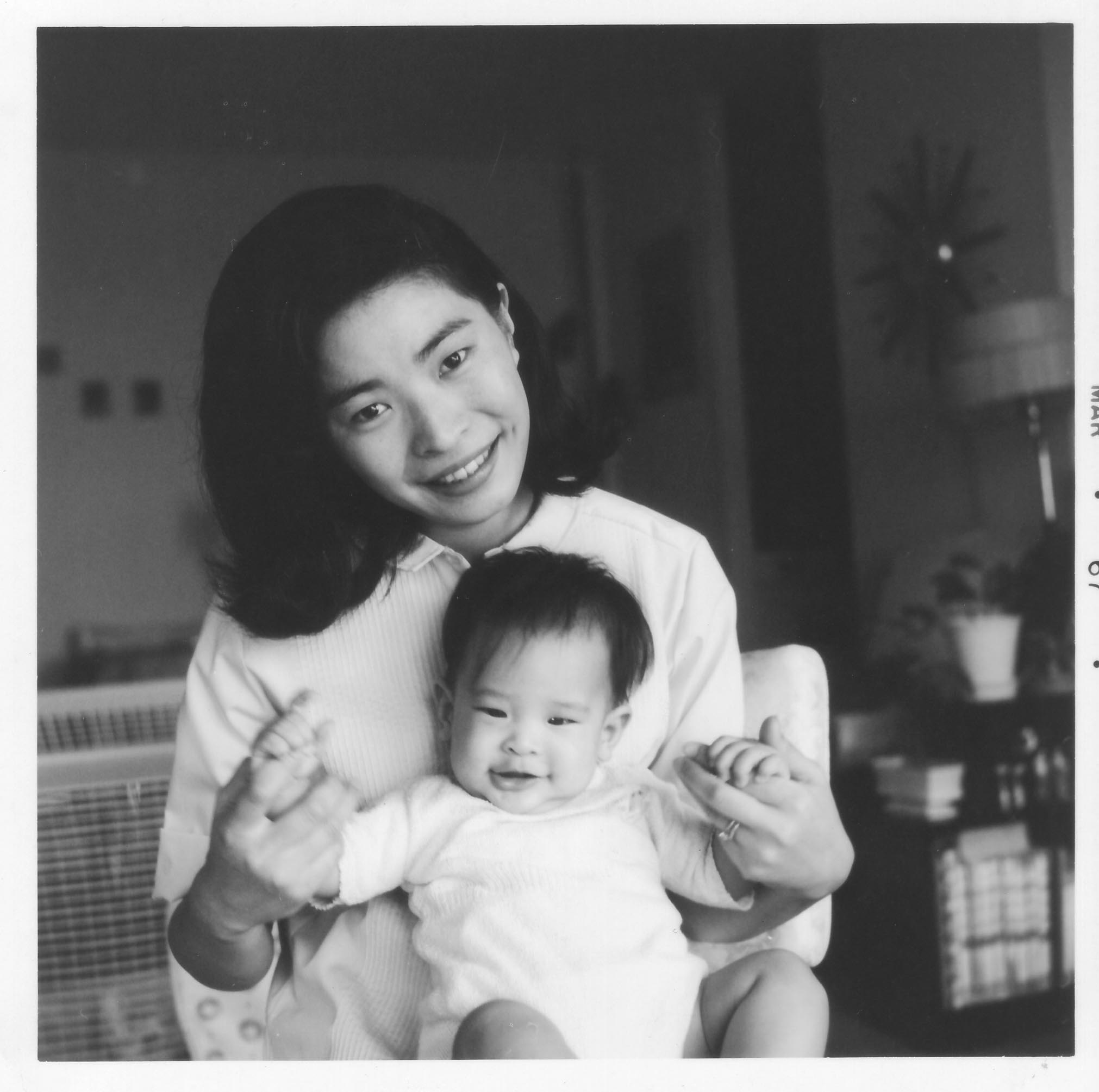
This is my mom.  Please spend a moment and look upon her beautiful face.  Perhaps you may see some of the same qualities that I do:  the hopeful happiness in her smile, the joyful but fiery intensity in her eyes, the serene youthfulness in her gaze.  She looks so young and new here, new at adulthood, parenthood, American life.  But for me, her son, I also see wisdom, awareness, a vague sense of knowing, some ill-defined proficiency in everything she does, though she was much newer at this parenting thing when the photo was taken than I am now.  A lifetime of observing my mom’s way of being and burning love for her family gives me well-informed license to perceive these special qualities:  this unique perspective creates a sensation, and feeling you cannot know unless it’s your own mother you see looking back at you from that old, black-and-white photograph.

Mom had gone through a lot to get to where she was when my dad snapped this photo.  She had left her native country and a life of comfort and stability–a true rarity in Korea at the time–for a modest life with a young Japanese-born, American-trained professor of Korean descent, now living and teaching in Michigan.  An accomplished pianist and young scholar in her own right, she threw herself eagerly into the responsibilities of being a wife and parent, managing to earn a master’s degree in mathematics along the way.  Looking at her young, smiling face, one wonders if she had some inkling of the adventures to come:  all the soccer and baseball games, the world travel, the many times playing hostess to friends and her husband’s many colleagues and students, the maturation and graduation of her sons, the germination and success of her businesses.

She could not have known, however, about all the challenges that lay ahead.  Apart from the passing of my father–the most devastating event in the lives of everybody in my immediate family–the biggest challenge of them all was her diagnosis with Parkinson disease, which has over the past several years gradually robbed her of her agility, coordination, and ability to walk.

A neurologist by training, I have counseled many patients and families regarding the management of Parkinson disease over the years.  No clinical experience or medical training could compare, however, to the education I have received from helping a parent cope with this cruel disorder every day.  It has been a truly humbling experience, realizing the true personal effects of Parkinson’s as I have through my mother.  This knowledge now in hand and without dwelling on details, I am qualified to offer this one, non-doctorly piece of simple, universal advice:  never get Parkinson’s.  It blows.

Today’s entry pertains to sleep because Mom started having substantial insomnia–without a clear trigger–years prior to her diagnosis with Parkinson’s.  Parkinson disease is commonly associated with sleep disruption and it is not uncommon for the first symptoms of Parkinson’s to be very nonspecific, starting well prior to the onset of more specific symptoms (tremor, slowness of movements, and the like), so I wonder in retrospect if her difficulties sleeping represented the heralding problem of her particular disorder.  Her neurologist, a movement disorder specialist, is doing what she can to manage the insomnia, but Mom still struggles with her sleep from time to time.

Image

Last year I had the pleasure of introducing my mother to Michael J. Fox, whose public battle with early-onset Parkinson disease has been the inspiration for many public speaking events and several excellent, highly recommended books (which Mom and I have both read), including Lucky Man:  A Memoir and Always Looking Up:  The Adventures of an Incurable Optimist.  Mr. Fox told Mom, “You look great!”  It was wonderful for her to meet someone who has lived what she is living, someone who understands.  She smiled quietly in response, and in her expression I saw that same hope and determination she’s always had, qualities so relentlessly challenged in recent years by this crippling disorder.  I believe that that fight will always be there, despite the fatigue, because that’s who she is and who she will always be.  And my family and I will continue to be there for her, helping her fight.  When it comes to my mom, I took off my doctor’s hat long ago.  I’m just a son, a boy loving and trying to help his parent.  That’s all I can be now, and I think that’s what she needs most.

Today’s Mother’s Day.  Dang it, man.  Love your mom.  Remember her if she’s gone.  Squeeze her tight if she’s not.  Call her if she’s away.  Just don’t waste a second of her presence.  Moms are incredibly precious.  I know mine is.

Sleep Song #5: “Sleeping With the Television On” by Billy Joel

Recently I wrote about my early love for Billy Joel’s music:

What a Young Billy Joel Fan Can Teach Us

The year after my mom bought me his great album 52nd Street in 1979, Joel’s Glass Houses was released, and I managed to get my grubby musical little hands on that album as well, and as I had done with its predecessor, I played it over and over in our basement until everybody in the house was bloomin’ sick of it.

The second song on the the second side of the LP is a happy 3-minute track called “Sleeping With the Television On.”  Here it is, for your listening pleasure.

It occurs to me as I write this that younger readers may be genuinely puzzled by the prelude to the song:  years ago, before “24-hour news cycles” and hundreds of channels to choose from, network television stations “signed off” late at night, following the national anthem, and the viewer would then see snow or some focus pattern until the next morning, when the station would resume its programming.

Anyhow, though this song actually has little to do with sleep, I am nonetheless using it as an opportunity to bring up one point:  many people do sleep with the television on, specifically because of their insomnia.

When you’re tossing and turning in bed for hours at a time, frustration inevitably develops, paradoxically making you feel more stimulated and awake.  This problem is compounded by a natural tendency to try to fall asleep, which rarely works, because you can’t force a biological function to occur just because you want it to, so the more you try to sleep, the more frustrated you get, and the worse the insomnia becomes.

At some point this can drive you completely nuts, and finally you arise from bed in disgust and go to the living room.  You turn on the TV and you lay down on the couch.  You’re now asleep instantly.

Why is that?  Because you’re no longer trying to sleep.  The TV also serves to distract you from the frustration, allowing your body’s natural impulses to become drowsy and fall asleep to take over unimpeded.

Sometimes this phenomenon leads people to believe that they need the TV to sleep, and that they are unable to sleep without it.  Trust me when I say that your body and brain do not biologically require a television set in front of you to generate sleep.  It can feel like they do, however, because, as I’ve mentioned in previous entries, we humans are creatures of habit.  We’re simply used to what we’re used to, and so over time sleeping without the television on after spending years sleeping in front of the TV seems foreign and abnormal.  To me, it’s reasonable to expect that if you managed to learn how to sleep well with the television on, you can learn how to sleep well without it as well.

Below you will see Joel’s lyrics for this great song.  Enjoy your weekend, everyone!

Sleeping With the Television On

(written by Billy Joel)

I’ve been watching you waltz all night Diane
Nobody’s found a way behind your defenses
They never notice the zap gun in your hand
Until you’re pointing it and stunning their senses
 
All night long, all night long
You’ll shoot ’em down because you’re waiting for somebody good to come on
But you’ll be sleeping with the television on
 
You say you’re looking for someone solid here
You can’t be bothered with those “just for the night” boys
Tonight unless you take some kind of chances dear
Tomorrow morning you’ll wake up with the white noise
 
All night long, all night long
You’re only standing there ’cause somebody once did somebody wrong
But you’ll be sleeping with the television on
 
Your eyes are saying talk to me, talk to me
But your attitude is “don’t waste my time”
Your eyes are saying talk to me, talk to me
But you won’t hear a word ’cause it just might be the same old line
 
This isn’t easy for me to say Diane
I know you don’t need anybody’s protection
I really wish I was less of a thinking man
And more a fool who’s not afraid of rejection
 
All night long, all night long
I’ll just be standing here ’cause I know I don’t have the guts to come on
And I’ll be sleeping with the television on
 
Your eyes are saying talk to me, talk to me
But my attitude is “boy, don’t waste your time”
Your eyes are saying talk to me, talk to me
But I won’t say a word ’cause it just might be somebody else’s same old line
 
All night long, all night long
We’ll just be standing here ’cause somebody might do somebody wrong
And we’ll be sleeping with the television on
Sleeping with the television on
Oh, sleeping with the television on

Governor Chris Christie Undergoes Weight Loss Surgery


Today it was announced that New Jersey Governor Chris Christie underwent lap band surgery for weight reduction in February.  Governor Christie’s longstanding struggle with his weight has been the subject of intense media scrutiny–perhaps in some cases unfairly–in recent years, but at least the publicity has brought some high-profile attention to a problem that many find difficult to discuss openly:  what to do about the American epidemic of obesity.

Bariatric surgery for weight loss has been around for a long time, but public awareness of the availability and benefits of bariatric programs has increased substantially in the past decade or so.  There are now numerous surgical techniques to modify the anatomic volume and functional volume of the stomach and surrounding gastrointestinal structures to reduce hunger, food intake volume, and therefore weight.  Historically bariatric procedures centered around the physical reduction of stomach size.  More recently, however, technological advances have allowed for many to undergo less invasive procedures, such as gastric banding (commonly known as lap banding).


Aggressive measures to lose weight are not just for cosmetic reasons.  Many people undergo bariatric surgery due to medical problems associated with obesity–such as diabetes and hypertension–or to reduce the likelihood of later developing obesity-associated chronic illnesses, including cardiovascular disease.  Though it is a misconception that you have to be overweight to have obstructive sleep apnea, it is true that your chances of having sleep apnea increases substantially if you’re overweight or obese.  Over the years a great many of my sleep apnea patients have undergone such gastric procedures, usually with great–and even dramatic–success.  Usually these folks experience a gradual improvement in their baseline sleep apnea as the weight loss progresses, and in some cases the sleep apnea may go away completely with sufficient loss in weight.

It’s important to know that a sleep evaluation is usually a standard, integral component in the overall assessment for one’s fitness for bariatric surgery, not only because sleep apnea is a common medical problem for overweight people, but also because sleep apnea represents a peri-operative risk, particularly following extubation while recovering from anesthesia.  Often I am called upon to evaluate a bariatric candidate’s sleep well prior to surgery.  If sleep apnea is diagnosed, treatment is initiated and continued.  In addition, the patient and the physician sleep specialist should interact regularly in the months following surgery.  If CPAP (continuous positive airway pressure) is utilized for the patient’s sleep apnea, for example, the CPAP air pressures likely will start to feel uncomfortably strong as the weight goes down, and adjustments will need to be made accordingly.  Mask and headgear fit often also require adjustments and re-adjustments.  Finally, once the weight has “plateaued” (such that no further substantial weight loss is anticipated), it’s standard to reassess the patient formally to determine the extent to which the pre-existing sleep apnea has improved or, hopefully, resolved completely.

There are many great bariatric programs around the country.  They offer hope to many people that have utilized more conservative measures to lose weight with limited success.  I wish the very best for Governor Christie.

Have a great evening, everyone!

Fall-Asleep News Blooper; Happy Cinco de Mayo!

Hoping everyone had a great weekend!  It was an absolutely gorgeous one out here in the Pacific Northwest!

Nothing profound or heavy for you tonight, I’m afraid.  It’s Cinco de Mayo, you know, so tonight should be about celebration, not science!  In that spirit, then, please enjoy this Twin Cities’ KARE 11 news blooper, in which an early morning anchor, Eric Perkins, appears to have awakened, uh, perhaps a little too early one morning.  I love his attempt at an on-air recovery upon realizing that he had just dozed off in front of the camera!

This serves as a gentle reminder to get proper amounts of sleep and, particularly if you work during hours other than the traditional 9-to-5, keep your sleep schedules as regular as you can between workdays and non-workdays.  Otherwise you may end up falling asleep by accident when you really shouldn’t be.

Cheers and have a great evening!

The Perils of Drowsy Driving

It’s 1 a.m.  You debated all day about how good of an idea it would be to drive all night to get to West Palm Beach, but the advantages of taking the chance won out:  you’d beat the traffic, and the time you’d save by getting there by early morning would make the challenge of pulling an all-nighter worth it.  So now you’re on a highway, quite alone and in pitch darkness.  The road is straight and monotonous.  You start to count the mile markers out of boredom.  After an hour and a half, things start to look blurry.  A hazy veil starts to descend slowly over your eyes and upon your brain.  You realize what is happening, and you shake your head violently to become more alert.  You roll down the windows, but the Florida late spring night air bathes your car interior with humid heat.  You crank your car stereo up to eleven.  Passing sign says, “rest stop, 40 miles.”  You push on, propelled by your determination and time.  You sing loudly to the Def Leppard song playing on the only rock and roll station you can find on this desolate stretch of road.  Soon, however, without realizing it, you gradually become silent.  You feel yourself giving in despite yourself.  You suddenly find yourself parked in the rest stop, but for the life of you you cannot recall how you got there.


Many of us (myself included) have been in this situation before.  You would not believe the stories I hear from some of my patients, who have fallen asleep behind the wheel of their 18-wheelers, behind the wheel of their school buses, or at the controls of their motorcycles on the freeway.  It should frighten you to know that many many thousands of people in the United States drive drowsy, including right next to you, every day.

Here are some sobering statistics.

According to the National Highway Traffic Safety Administration, over 100,000 police-reported motor vehicle accidents occur in the United States each year due to drowsiness; this number is likely an underestimation of the total number of fall-asleep car crashes in this country, because undoubtedly there are many accidents (particularly single-car crashes) that are never reported.  Due to these 100,000 crashes, roughly 40,000 injuries occur every year, and 1,550 people die per year.

According to an NHTSA-sponsored telephone survey report entitled “National Survey of Distracted and Drowsy Driving Attitudes and Behaviors,” 37% of drivers polled have nodded off for at least a moment or fallen asleep while driving at least once in their lives while driving; 8% have fallen asleep driving within the past six months.  Falling asleep behind the wheel appears most common among drivers age 21-29 and males, and least common among drivers over age 64 and females.

71% of 18-29 year-olds have reported being drowsy while driving.  50% of 30-64 year-olds have reported being drowsy while driving.

It makes sense that people are found to be most likely to fall asleep driving in the early morning hours, particularly 2-7 a.m.  People are also particularly at risk after having driven for long periods of time (3-4 hours or more) or if they are sleep-deprived (i.e., under 6 hours of sleep) the night prior to driving.  Paradoxically, the faster people drive, the statistically more likely they will become involved in a fall-asleep car crash, presumably because unlike in-city driving with all its starts and stops, highway driving is continuous, sedentary, and monotonous, making one predisposed to drowsiness prone to head-bobbing and dozing at exactly the time in which being alert is the most necessary.

You’ve probably heard that drowsy driving is every bit as dangerous as drunk driving.  I would go one step further and say that drowsy driving is in some ways more dangerous than drunk driving, simply because there are just so many drowsy drivers out there all the time, particularly at night, but also during the day.

So, some simple tips to reduce your likelihood of falling asleep behind the wheel:

1.  Get proper amounts of sleep each night, and particularly the night before a trip.
2.  Avoid driving, particularly long distances, late at night if you can possibly help it.
3.  If you HAVE to drive late at night, bring a driving buddy.  Consider coffee or a caffeine-containing energy drink.  Some rest stops have free coffee to prevent drowsy driving, but don’t count on coffee being available to you in this way.  Be prepared.
4.  Take a break frequently, even if you’re not drowsy.  Find rest stops, pull over, get some fresh air, walk about.
5.  Pull over and take a nap if you have to, and lock your car doors.  Better to show up late than to show up dead.
6.  NEVER, EVER operate a vehicle or machinery if you’re drowsy or fatigued.  Period.


What’s With These Night Sweats?

Many of us have experienced it before, and some of us frequently:  awakening in the middle of the night drenched in sweat.  The bed sheets are soaked through; you feel this strange, uncomfortable sensation of being hot and cold at the same time.  You may need to take a shower to wash off all the mess.  WTH?


There are numerous potential reasons why you might sweat substantially at night.

1.  The room’s too hot.  It’s a painfully obvious cause, but a very common cause nonetheless.  Some couples disagree about how warm or cool the bedroom should be at night; you might be surprised by how often this problem occurs, and how bitter the disagreements can become.  In addition, many people simply “run hot” at night and prefer to sleep in a very cool, or even downright cold, environment.

2.  Infections.  A whole host of different viral, bacterial, and fungal organisms, most commonly causing upper respiratory tract infections and the flu, can cause fever and sweating.

3.  An underlying medical disorder.  Conditions that may be associated with night sweats would include certain cancers, thyroid problems and other endocrine abnormalities, a few neurologic disorders, and hypoglycemia related to diabetes medications.  Some medications, such as aspirin, acetaminophen, and some antidepressants, can also be associated with night sweats in and of themselves.

4.  An underlying sleep disorder.  Obstructive sleep apnea often causes “sympathetic overactivation,” triggering constant surges of adrenalin and other hormones in your bloodstream at night, leading to sweating.  The restlessness and physical activity associated with frequent arousals due to the breathing pauses also frequently contribute to the tendency toward night sweats.

5.  You are in or approaching the “change of life.”  Those hot flashes that accompany menopause can be very bothersome at night, potentially leading to substantial sleep disruption and in some cases chronic insomnia in women.

6.  Stress.  Increased sympathetic activity may also be to blame for an association between stress and sweating at night.

7.  You just sweat a lot, and it’s not clear why.  “Idiopathic hyperhydrosis” means that you simply sweat profusely, and diagnostic testing does not reveal a specific underlying medical reason for it.

What to do about the night sweats, then, depends in large part on the underlying cause(s).  Here are some general suggestions, however.

Sleep in a cool, comfortable, dark environment.  Use bedding materials and clothing that are comfortable and that don’t trap moisture.  See your physician if there is the potential for a concern for an underlying medical problem (weight loss, substantial fatigue, and fever, for example, should prompt you to consider medical attention).  Your primary care physician should be alerted to symptoms consistent with menopause.  If you snore loudly, gasp out of sleep, have witnessed breathing pauses during sleep, and feel tired and sleepy during the day, I would recommend seeing a doc like me, someone who specializes in sleep medicine.


My Name is Maracujá!: My Interview With Eduardo Mendonça, Part 2

As those in my musical circles are aware, I have a Brazilian name.  I am Maracujá.

Maracujá is the Portuguese name of a passion fruit (Passiflora edulis) native to many South American countries, including Brazil.  It is often used in desserts and drinks (including the caipirinha, a famous Brazilian beverage, as well as bottled fruit drinks, such as depicted in the photo below).  In addition, it is known as a mild sedative, and it is an active ingredient in numerous sleep aids in Brazil.

I love the name.  It means a lot to me.  There is affection and friendship imbued in it, and as you can see it is also relevant to my career and my work.

Maracujá was bestowed upon me by my friend, Eduardo Mendonça, leader of the Seattle-based band Show Brazil!.  During an outdoor festival performance last year, Eduardo introduced me to the audience as Maracujá for the first time.  He also told the crowd that this was to be a christening:  he summoned everybody to shout out the name after him.  Three times a crowd of hundreds of people roared my new name.  All I could do was bow in gratitude and humility.  It was a wonderful experience, and I have Eduardo to thank forever for that brief but profound life moment.  Eduardo has introduced me to our audiences with this name ever since.

IMG_0198

During a recent chat over coffee I asked Eduardo to recount how he came up with this title that is now mine.

MC: As you know, you are the one who christened me with this name, Maracujá, which I hold sacred, personally, and which I appreciate very much. I was hoping you could talk about how you arrived at the name, and what it means historically and culturally in Brazil.

EM: Sure. To baptize you with this name was very much an honor for me, because giving a Brazilian name to someone requires a very strong connection, a connection with what you do and what kind of person you are. To best represent you, I came up with the Maracujá name because of the work that you do, helping people with sleep disorders and making life better, right? That’s very important, you thinking of the well-being of someone. How I could connect that, your work and yourself as a person helping others with a Brazilian meaning that could represent you very well? Maracujá is used in Brazil as a natural medicine to relax people. Some people put in a lot of sugar, even though sugar doesn’t go well with relaxing.  But if you put in the right dose of sugar, it would be fine, and would really create a natural relaxing time and relaxing moment, to help you with sleep, to help you calm down, and that’s how I came up with the name for you. It was not difficult at all to connect it to what you are, what you do, with something in Brazil that is a function that can make things good for somebody.

MC: There’s clearly a deep connection between relaxation and sleep. Is it known in the Brazilian culture that the passion fruit or its derivatives can help a person sleep? Does it really have a sedative property, actually make you drowsy?

EM: Yes.  Of course it depends on the quantity that you have. Definitely I remember my parents, when I was a kid, preparing the passion fruit, the maracujá juice to make a very energetic kid calm down. It helped me sleep. If you give it a few hours before you go to bed, and of course if you don’t have anything else in your body to cut that effect, it definitely helps you relax and sleep.

MC: Again, I’m honored to have the name, and I wear it proudly.  Thank you, Eduardo.

Show Brazil! plays all year ’round, and the summer season promises to be great this year!  Obrigado, Eduardo!

Image

Why Sleep Center Accreditation is Important

Long time no see, everyone!  This past week has been very full, limiting my abilities to write until now.  One important event of this week was an American Academy of Sleep Medicine (AASM) re-accreditation site visit for a sleep center that I medically direct.  I am pleased to report that the facility remains a fully AASM-accredited sleep center.

To most, medical facility accreditation may not mean much, or anything at all.  AASM accreditation does mean a lot, however, to clinicians and staff for whom it is important to maintain a distinction for utilizing accepted medical and procedural standards of care regarding the diagnosis and management of patients with sleep disorders.  The AASM is the primary governing body that develops and maintains national standards of care in sleep medicine, establishing benchmarks for quality of work done by physicians and in sleep centers based on sound, published scientific data.  As such, AASM accreditation should be important for patients as well:  though there are certainly plenty of excellent sleep centers that are not accredited, it is reasonable to presume that one’s care in an AASM-accredited sleep center is generally more likely to be in keeping with established and accepted national standards of care as compared to in an unaccredited facility, particularly one that’s been around for many years without any intention to obtain accreditation.

AASM accreditation requires adherence to specific standards and guidelines for clinical work and management, diagnostic testing, and operational procedures.  It is a rigorous process, one that involves a detailed application, demonstration of maintenance of education and certification, ongoing adherence to AASM practice parameters, and site visits and inspections.  Plus, rules and standards change all the time in medicine, so accreditation forces us to keep up, stay current, and continue to do our best caring for patients in this ever-changing modern world.  Finally, and importantly, accreditation also means that a sleep center’s physicians are able to deal with all sleep-related problems, not just the easy stuff.

Many years ago I participated in the accreditation process as an AASM site inspector.  It was a great experience; it gave me opportunities to travel and to see how other centers did things.  One of the medical directors I met during my visit told me that he looked forward to our inspection because he considered it a learning opportunity.  That remark has stuck with me ever since:  the idea that a visit from the AASM should be something not to be dreaded, like an audit or an investigation, but instead something very positive, something that allows for further growth and mastery in the field of sleep medicine.  In my career I have seen sleep centers through their own accreditation as medical director many times, and in many ways the process is fun.  I find it interesting to hear the perspective of the site inspector, pick his or her brain a little, understand how physicians around the country are handling certain complex situations, and learn how others are dealing with all the changes constantly thrust upon us in American health care.

To those who ask me how to choose where to go for their sleep medicine care, I do recommend considering exploring which area sleep centers are accredited by the American Academy of Sleep Medicine as they make their choices.  Some insurance plans and other administrative bodies require patients to get their care at accredited facilities.  I recognize that some underserved parts of the country may not have accredited centers yet, and it also always takes time for a new sleep center to obtain its accreditation, but the pathway to accreditation is quite accessible now for those sleep specialists willing to step up.

And no, the American Academy of Sleep Medicine didn’t pay me to write any of this!  Have a great evening, everyone.  Cheers!

Happy National Sleep Apnea Awareness Day!

I’m sure this is common knowledge to most all of you, but today, the 18th of April, is National Sleep Apnea Awareness Day.  All RIGHT!  In a week full of terrible, tragic national events, we need something to celebrate!

Increasing awareness of sleep apnea is part of my job.  However, there is a selection bias of sorts at work:  by the time patients with probable sleep apnea come to my clinic for a visit, they usually come with some at least rudimentary awareness of the disorder, or else they may well not have come in the first place.  So it’s nice to use this written forum for the purpose of raising public awareness as well.

Obstructive sleep apnea is a medical disorder in which one’s upper airway collapses down during sleep.

The closure of the upper airway in and around the throat causes your blood oxygen levels to become low and your carbon dioxide levels to become high, because air doesn’t flow into the lungs properly.  These chemical changes in your blood are toxic to your brain (among other organs), which responds by forcing you awake frequently throughout the night to relieve the obstruction.  These awakenings are often so brief you don’t recall them (though occasional brief gasping sensations or snorting sounds may be perceived suddenly out of sleep by those suffering from sleep apnea), but if this occurs all night long your sleep becomes so disrupted and of such poor quality that you end up feeling tired, fatigued, and sleepy during the day.  Sleep apnea is often associated with substantial snoring, and bed partners may also witness stoppages in your breathing while you are sleeping, followed by a choking or gasping noise when you arouse briefly because of the low oxygen levels.

About 42 million Americans have obstructive sleep apnea.  Please think about this for a moment:  that’s huge numbers of people.  It’s estimated that about 25% of adult patients seen in primary care clinics have sleep apnea.  And out of these millions of people with sleep apnea, the substantial majority of them have not yet been diagnosed.  Why?  Sleep apnea symptoms are easy to blow off because 1) they’re usually not physically painful (unless you wreck your car due to falling asleep behind the wheel, of course), 2) you’re not awake to experience the breathing pauses first-hand, 3) you’re not awake to hear your own snoring, 4) people tend to get used to the feeling of chronic drowsiness, such that daytime fatigue eventually just feels normal, 5) many people don’t feel that suffocating in their sleep is an emergency (!), and 6) some think it would be a pain or an inconvenience to get evaluated.  Add in our country’s financial problems and increased insurance deductibles, and you have lots of incentives not to make that clinic visit.

I encourage you to consider a few points, however.  These days, treatments for sleep apnea are excellent and usually very successful with proper ongoing support from the physician sleep specialist and the sleep center.  It’s very gratifying to hear my patients tell me about the dramatic, life-changing “night and day difference” they often feel as a result of treatment.  People feel much more awake and alert during the day, there is much less sleep disruption at night, and, as an added bonus, the obnoxious snoring GOES AWAY, making spouses and bed partners very happy.  I’ve had patients’ spouses hug and kiss me out of happiness!  Finally, it’s important to know that untreated sleep apnea is clearly associated with an increased risk of developing medical problems, including early heart failure, early heart attack and stroke, high blood pressure, and sudden death during sleep.

There are excellent ways to diagnose and manage this huge problem, but such things do not come to pass unless the sleep apnea sufferer recognizes and acknowledges that there is a problem and seeks an evaluation.  My recommendation would be to seek the services of a well-trained physician sleep specialist in a sleep center accredited by the American Academy of Sleep Medicine (AASM).  To find an accredited sleep center in your area, try this weblink:  www.sleepcenters.org

Happy National Sleep Apnea Awareness Day, everyone!

Sleep Song #4, in Honor of Rush’s RRHF Induction: “La Villa Strangiato”

Today is an important day. Not only is it National Sleep Apnea Awareness Day, it is also the day of the 28th Annual Rock and Roll Hall of Fame Induction Ceremony. Among this year’s well-deserving inductees is my favorite band of all time, Rush.

I won’t bore you with all the reasons why I love Geddy, Alex, and Neil, because seriously I could go on and on and on.  Suffice it to say that I grew up listening to Rush, whose music sparked my creative energies and allowed me to think of and perceive instrumentation and lyrics in new, unconventional ways.  Rush’s music made life even better during good times and pulled me up during bad times.  And my man Neil Peart . . . well, it’s tough to name a better drummer alive today.  Read some of his books and know his history to understand why Neil is a true inspiration to me.

One of Rush’s greatest pieces is “La Villa Strangiato (An Exercise in Self-Indulgence),” from the 1978 release Hemispheres (which still stands as my single favorite rock album of all time).  It is Rush’s first completely instrumental studio recording, though in subsequent years live performances would occasionally feature some vocals from Geddy Lee and, sometimes, various humorous comments from guitarist “Lerxst” Lifeson.  In my strong opinion, this song is a masterpiece.  It is mind-blowingly complex, an auditory nirvana for music geeks such as myself.

Why is “La Villa Strangiato” a sleep song?  It was inspired by one of Alex Lifeson’s dreams.  The song is comprised of multiple movements, which coincide with the recalled dream imagery:

I: “Buenas Noches, Mein Froinds!”
II: “To sleep, perchance to dream…”
III: “Strangiato Theme”
IV: “A Lerxst in Wonderland”
V: “Monsters!”
VI: “The Ghost of the Aragon”
VII: “Danforth and Pape”
VIII: “The Waltz of the Shreves”
IX: “Never Turn Your Back on a Monster!”
X: “Monsters! (Reprise)”
XI: “Strangiato theme (Reprise)”
XII: “A Farewell to Things”

Posted here is a relatively recent live version of the song.  If you’re a modern music fan, however, I strongly encourage you to get your hands on the original 1978 studio version, put on your Big Beat headphones, and get lost in Lerxst’s dream for 9 minutes.  You’ll be glad you did.

Congratulations to my brothers in Rush for finally, FINALLY!, getting the recognition they deserve from the Rock and Roll Hall of Fame.  Buenas Noches, Mein Froinds!